Which pantry format do you have or want?
Houzz found 47% of kitchen renovators added pantry cabinets and 16% a walk-in.
No votes yet. Yours will be the first. · saved on this device
Loading...
Closet Flow Guide · Pantry Organization cost guide
Angi's 2026 data puts pantry organizer systems at $1,000 to $3,000 installed and a custom pantry at an average of $2,000, with reach-in fit-outs from about $250. Cost depends mostly on format, square footage, shelf material, the number of pull-outs and whether lighting, outlets or wall changes are needed. Building a new walk-in with framing, drywall and wiring is a separate budget: CostToRenovate puts it at $3,000–$15,000.
Pantry costs split into two very different kinds of work. Fitting shelves into an existing pantry or closet is a modest job that takes hours. Creating a new walk-in pantry by moving walls, adding a door or wiring an outlet is construction, with trades, permits and inspections. Most pantry projects are the first kind, and most budget surprises come from drifting into the second without planning for it.
This page explains the ranges by format, the material tiers, the add-ons worth paying for, the labor share, how timing affects the bill, what to cut first and sample budgets. The cost table and calculator further down show the published line items, so the text focuses on how they combine and where the money is best spent.
| Item | Low | High | Unit | Notes |
|---|---|---|---|---|
| Reach-in pantry fit-out | $250 | $1,500 | per pantry | Angi 2026 |
| Small walk-in pantry | $750 | $2,000 | per pantry | Angi 2026 |
| Large walk-in pantry (about 100 sq ft) | $2,000 | $3,500 | per pantry | Angi 2026; $20–$40 per sq ft |
| Pantry organizer system | $1,000 | $3,000 | per pantry | Angi 2026 organizer guide |
| New framed walk-in pantry (construction) | $3,000 | $15,000 | per pantry | CostToRenovate 2026; framing, drywall, electrical, shelving |
| Labor | $20 | $20 | per sq ft | Angi 2026 estimate |
| Pull-out shelves or baskets | $100 | $400 | per pull-out | Typical accessory pricing; confirm on estimate |
| Professional organizer, one pantry | $150 | $500 | flat | HomeGuide one-room package range |
Angi's 2026 figures anchor the range. Pantry organizer systems run $1,000–$3,000 installed, and a custom pantry averages $2,000. Reach-in pantry fit-outs, such as a converted hall closet, start around a few hundred dollars. Small walk-ins cost more, and larger walk-ins of roughly 100 square feet cost more still, with Angi citing roughly $20 to $40 per square foot for that size. Those figures assume the room already exists and needs only shelving and accessories.
Pantry cabinets in a kitchen are priced as cabinetry, which is a different budget with its own drivers: box construction, door style and the kitchen's overall finish level. Houzz found 47% of kitchen renovators added pantry cabinets during 2025 and 2026 projects. The walk-in versus cabinet comparison covers how to choose between the two formats before pricing either. Keep that figure separate from any shelving quote.
Entry-tier pantries use coated wire shelving, which is inexpensive and adjustable but lets small jars tip and crumbs fall to the shelf below. Mid-tier pantries use laminate shelves with banded edges, which wipe clean and hold rows of cans without sagging when spans are kept short. Upper-tier pantries use solid wood or painted plywood shelving, sometimes with a counter, drawers and a finished face that matches the kitchen.
The tier matters less in a pantry than in a closet, because pantry shelving is simpler and has fewer accessories. Most pantries get the best value from mid-tier laminate. Spend on shelf depth and spacing before spending on material; shallow, adjustable shelves outperform deep, expensive ones because food stays visible and nothing gets lost at the back behind a row of cereal boxes. Upper-tier wood is mostly a style choice in a walk-in that guests will see. In butler pantries, Houzz found 59% of renovators chose enclosed cabinetry and 52% open shelving.
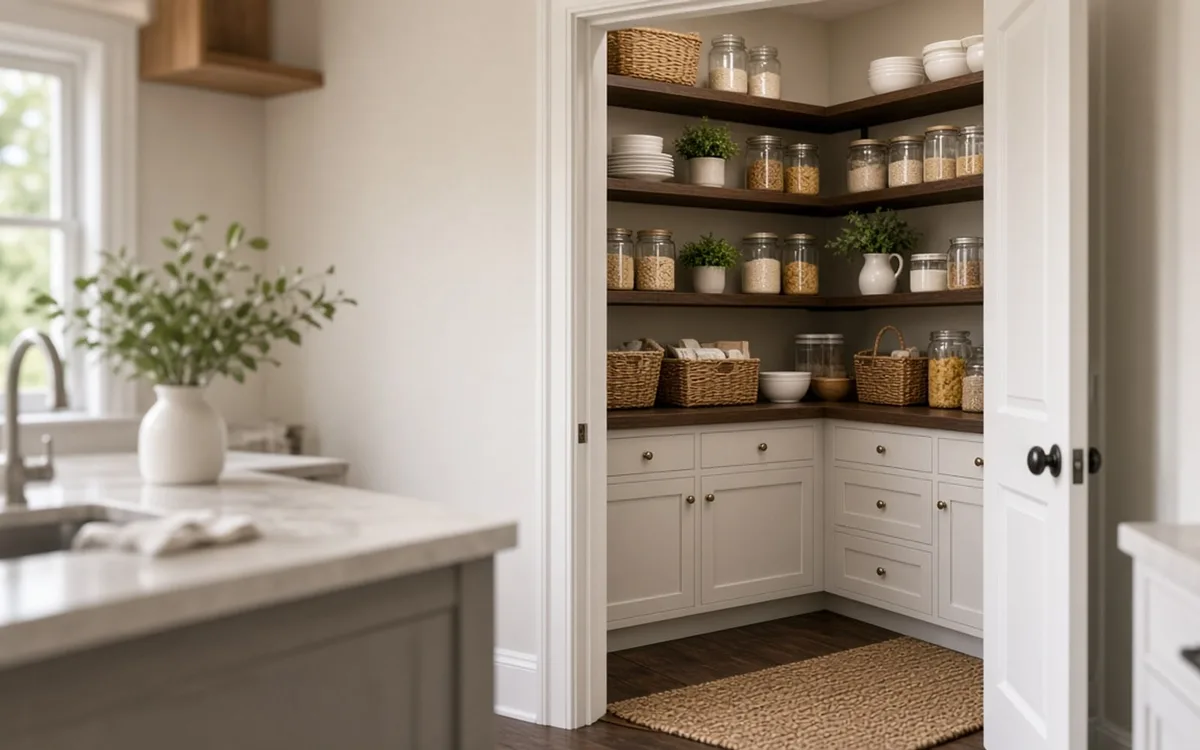
Pull-outs are the most valuable add-on in deep cabinets and deep pantry shelves. They bring the back row forward and prevent forgotten food. They are priced per unit, so put them where daily items live. A light comes next, especially in a walk-in without a window. An outlet for small appliances is valuable if the pantry will hold them, though it brings an electrician and possibly a permit.
Door racks, corner lazy Susans, produce drawers and spice pull-outs are smaller add-ons with moderate value. Containers and bins are often oversold; buy them after the shelves are in and the inventory is settled. Houzz found 67% of butler-pantry renovators use it for small-appliance storage, which makes an outlet and a sturdy lower shelf worth budgeting for in any walk-in. A step stool that folds flat is worth budgeting for in any walk-in with high shelves.
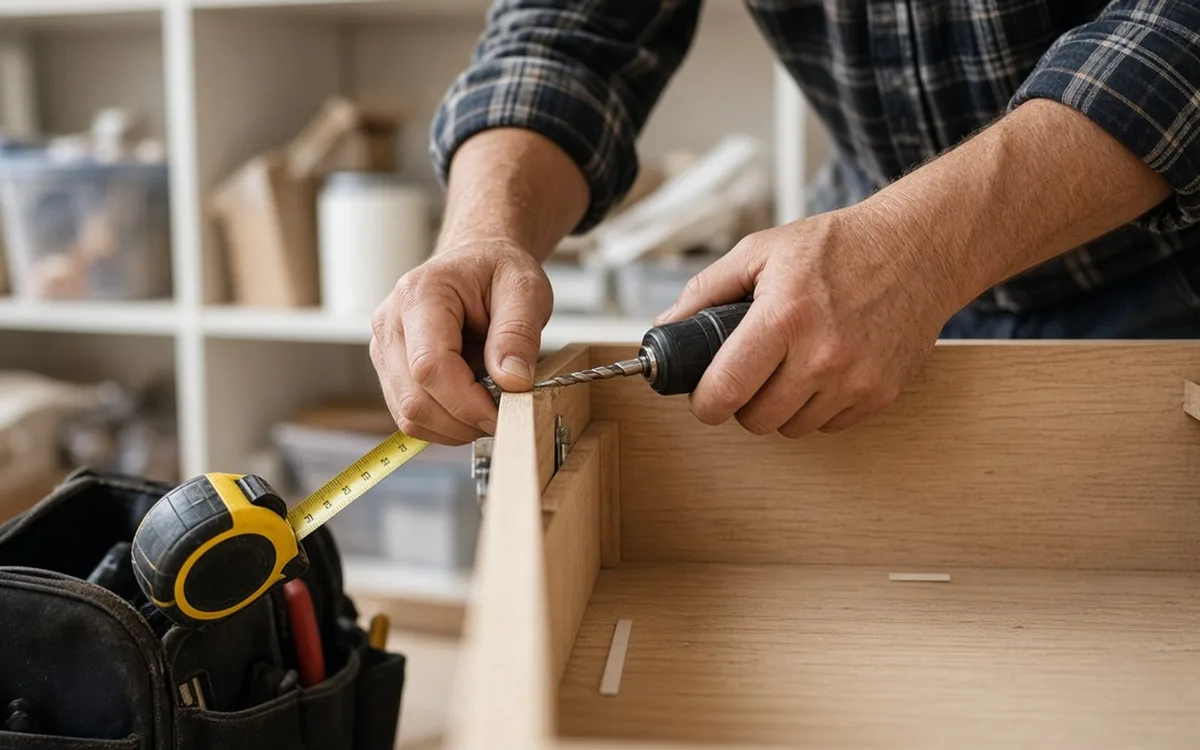
Labor is a meaningful share of a pantry job because the shelving itself is inexpensive. Angi's cost table lists pantry labor at roughly $20 per square foot. Installing shelving in a reach-in pantry takes a few hours; a walk-in takes a day or more once supports, adjustable standards and pull-outs are included. Removing old shelving, patching and painting before the new shelves go up all add time.
Electrical work for a light or an outlet brings an electrician and often a permit, which adds labor quickly. Framing changes bring a carpenter and add significantly more. A professional organizer can also be part of the budget: HomeAdvisor reports hourly rates of $55–$100 per hour, and a single pantry session is often enough to sort, purge expired food and set up zones before the installer measures.
Simple shelving fit-outs happen quickly and do not depend on lead times, since wire and stock laminate are usually in stock. Custom laminate shelving and pantry cabinets need manufacturing time, which adds weeks. Rushing rarely saves money. Pantry work done as part of a kitchen remodel follows the kitchen's schedule and often costs less per item because the carpenter and electrician are already on site. That coordination is one of the few ways timing genuinely lowers the bill.
If electrical or framing work is involved, permits and inspections add time and must happen before the shelving goes in. Plan the pantry early in a kitchen remodel so the outlet and light are wired during rough-in. Adding an outlet after the kitchen walls are closed and painted costs noticeably more than adding it while the walls are still open, and it risks patched drywall inside a new pantry.
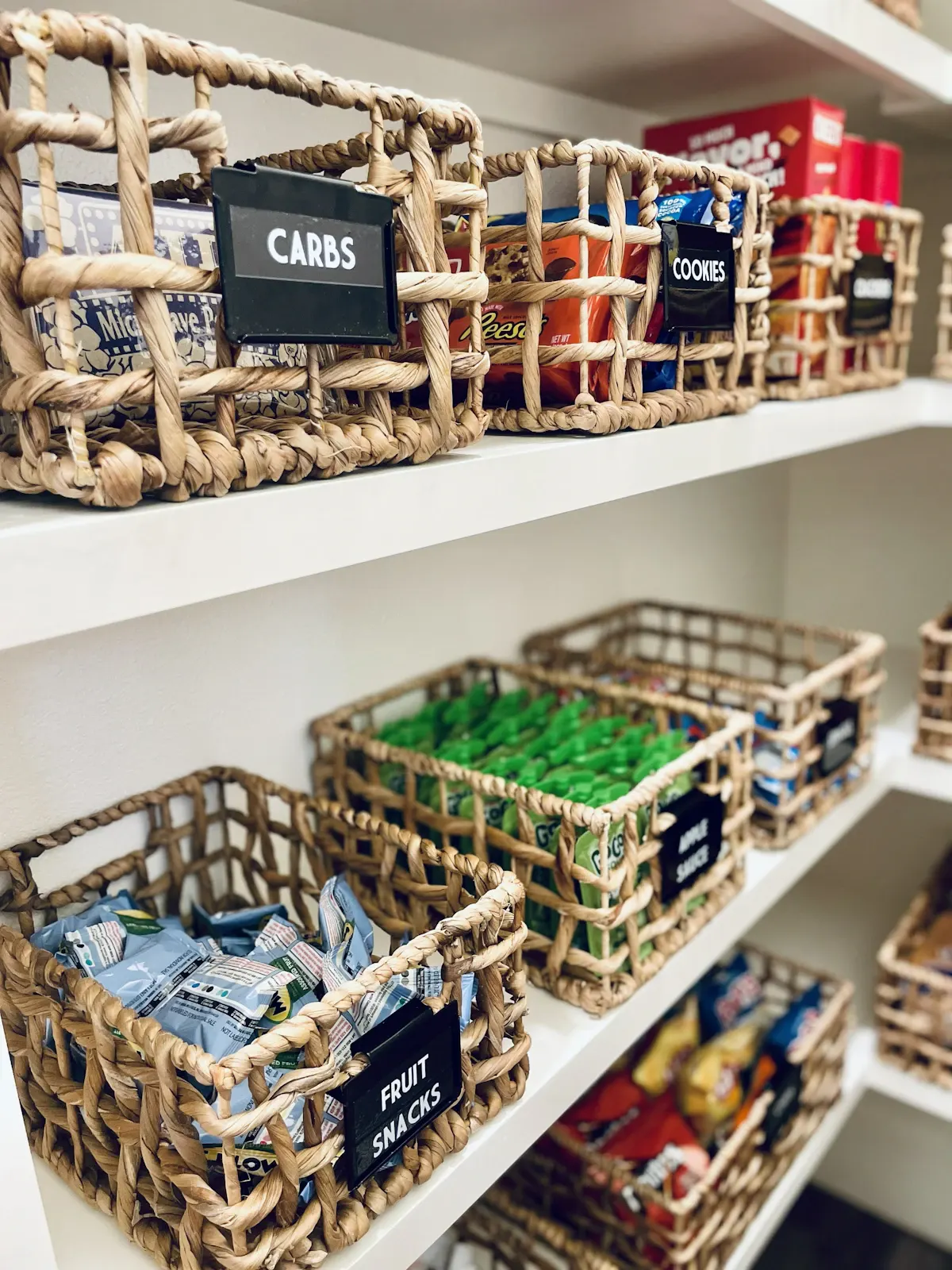
Cut containers and decorative accessories first; they add cost without adding capacity. Next, reduce pull-outs to the shelves that hold daily items and leave upper shelves fixed or adjustable. Consider coated wire or simple laminate instead of solid wood; Angi prices a wire organizer at $800–$2,000 against $1,200–$3,500 for laminate. Angi's installed band for a pantry organizer system, $1,000–$3,000, shows how far those choices move the total. Keep adjustable shelving, adequate lighting and shelf depths that match your packages, because those decide whether the pantry works every day. The pantry service page explains which shelves benefit most from pull-outs.
Avoid cutting the planning. A pantry designed around a real inventory needs fewer accessories because items fit naturally on the first try, and it avoids paying for shelves at the wrong height. The planning guide explains how to count packages, bulk items and appliances before designing, and how to write that count into a brief an installer can price. Most of the savings in a pantry come from that one step.
A hall closet converted to a reach-in pantry with adjustable laminate shelves and a door rack typically lands near the low end of Angi's pantry figures. A small walk-in with three walls of adjustable laminate shelving, a plug-in light and two pull-outs typically lands near Angi's custom pantry average. A larger walk-in with a counter, a wired outlet, drawers and several pull-outs lands higher, within or above the organizer system range.
Creating a walk-in by moving walls is a remodeling project with its own budget for framing, drywall, flooring, electrical and permits, and it should be priced separately from the shelving. CostToRenovate's 2026 range for a new framed walk-in is $3,000–$15,000 depending on size, several times the cost of shelving an existing room. For your own estimate, use the cost calculator and read the pantry organization page for depth and spacing rules. Ask for the two parts as separate lines on any bid.
By the numbers
Planning figures from published U.S. sources; every card links to where the number came from.
$1,000–$3,000
pantry organizer system installed (Angi 2026)
Angi's closet organizer guide prices a pantry system in laminate or MDF on adjustable standards. Pull-outs, drawers, and an appliance counter push toward the top of the band.
Angi, Closet Organizer Cost Guide (2026)$2,000
average cost of a custom pantry, $250–$5,000 range (2026)
Angi prices a reach-in at $250 to $1,500, a small walk-in at $750 to $2,000, and a large 100-square-foot walk-in at $2,000 to $3,500, or $20 to $40 per square foot with labor about $20 of that.
Angi, How Much Does a Custom Pantry Cost to Build? [2026 Data] (2026)47%
of surveyed kitchen renovators added pantry cabinets (2025–2026 projects)
Houzz's 2026 kitchen study is a platform sample of renovating homeowners, not national installation totals. Pantry cabinets were the most common built-in; a kitchen remodel usually includes the pantry.
2026 U.S. Houzz Kitchen Trends Study (2026)67%
of butler-pantry renovators use it for small-appliance storage
Houzz's 2026 study also finds 61% added a prep counter, 59% enclosed cabinetry, and 52% open shelving in butler pantries. The pantry has become the appliance garage as much as the food store.
2026 U.S. Houzz Kitchen Trends Study (2026)The calculator uses the same closet and home organization benchmarks as this guide. Set the size and tier, then request a written estimate to check it against a real proposal.
Homeowner polls
Houzz found 47% of kitchen renovators added pantry cabinets and 16% a walk-in.
No votes yet. Yours will be the first. · saved on this device
No votes yet. Yours will be the first. · saved on this device
Shelving in an existing closet is the lowest-cost pantry option, often a few hundred dollars to a little over a thousand depending on materials and accessories. Adding a light or an outlet adds electrical costs and possibly a permit. Changing the door, widening the opening or moving a wall adds framing costs and turns the job into a small remodel.
They cost more than fixed shelves because each one needs a box or basket, a pair of slides and careful installation, and they are priced per unit. They make deep storage usable, which is where their value lies. Use them selectively on the cabinets and deep shelves holding daily items, and leave shallow shelves fixed or adjustable.
If sorting, purging and setting up zones are the real problem, an organizer is cost-effective, and Angi reports an average organizer project around $534. If the problem is the shelving itself, such as deep fixed shelves or no light, an installer is what you need. Some households book the organizer first and the installer second.
Shelving alone usually does not, since it counts as finish work in most jurisdictions. Adding a hardwired light or an outlet, moving walls or changing a doorway usually does. Rules vary locally, so confirm with your building department. The permits guide on this site explains the typical triggers and the order of inspections.
Yes, for wire or simple laminate shelves on adjustable standards. Find the studs, level carefully and add supports on long spans so shelves do not sag under cans. Custom cabinets and pull-outs are harder to fit precisely and are usually worth professional installation, especially inside existing cabinets where clearances are tight.
Shallow shelves, around ten to sixteen inches deep, keep items visible and hold more usable food per dollar than deep shelves, because nothing hides behind the front row. Deeper shelves work at the bottom for bulk items, drinks and appliances. A mix of shallow upper shelves and one deeper lower shelf suits most walk-ins.
For households that cook often, buy in bulk or store several appliances, a walk-in holds more per dollar of shelving and keeps counters clear. NAHB found most buyers want one. If creating it requires significant construction, weigh that cost against the space it takes from other rooms and whether a reach-in would hold the inventory.
 Custom Closet Systems · Cost guideHow much a custom closet costs in 2026, and where the money goes
Angi's 2026 data puts the average custom closet at $2,128, with most projects between $1,046 and $3,210, and installed organizers at $50 to $150 per linear foot.
 Garage Storage Solutions · Cost guideWhat garage storage costs in 2026, and how to phase the spending
Fixr puts the average professionally installed garage system at about $3,500, with whole-garage prefab materials at $2,300 to $6,300 and custom at $2,900 to $8,200.
 Mudroom Built-Ins · Cost guideWhat a mudroom built-in costs in 2026, from bench and hooks to an addition
A prefab bench and hook wall costs a few hundred dollars installed, a custom painted built-in in an existing entry costs more depending on length and drawers, conversions run $50 to $100 per square foot per Angi, and a mudroom addition averages $12,000.
 Service guidePantry Organization
Pantry organization is the planning and fitting of a food closet, walk-in pantry, or pantry cabinet so everyday items are visible and reachable and bulk items and appliances have a place.
Service guideCustom Closet SystemsA custom closet system is shelving, rods, drawers, and doors cut and installed to the dimensions of your closet and the contents of your wardrobe.
Service guideMudroom Built-InsMudroom built-ins are the bench, cubbies, hooks, drawers, and cabinets that give each household member a place for coats, bags, and shoes at the door.
 Free toolStorage cost calculator: price the system by the linear foot
Size, material tier and complexity in, a realistic budget range out.
 Free toolWhich storage option fits? Comparisons with sourced numbers
Side-by-side tables for the decisions that change the price most.
 Free toolHow well do you understand storage pricing and design?
9 questions that show what you already know and what to check next.
 Free toolPolls: how other homeowners handle storage
See what other planners chose and add your vote.
Tell us the size, the condition of what is there now, and what you want to change. Closet Flow Guide passes your request to independent local professionals, who reply with written, no-obligation estimates. The service is free to use.