Which space in your home overflows first?
StorageCafe found 42% of Americans feel cluttered at home, with clothing the biggest culprit.
No votes yet. Yours will be the first. · saved on this device
Loading...
Closet Flow Guide · Services
This hub covers the four scopes homeowners most often send to a storage professional: custom closet systems priced per linear foot, pantry organization built around packages and appliances, garage storage sized to weights and vehicle clearances, and mudroom built-ins planned around the daily route. Each page gives sourced prices, the failure points, and what to include in a request for a free written estimate.
Storage is one industry with four very different jobs. A closet installer, a cabinet shop, a garage-systems dealer, and a finish carpenter all describe themselves as organization professionals, and each prices differently. Mordor Intelligence sizes the U.S. home organizers and storage market at $12.05B in 2025, most of it products rather than installation, which is why the installed price of a system is so hard to find in one place.
The four pages below sort the work by what is being stored and how the space is priced. If your project is one closet, start with custom closet systems. If it spans rooms, read the page for the room with the worst overflow first; the calculator prices any of them by the linear foot.
 Service guideCustom Closet Systems
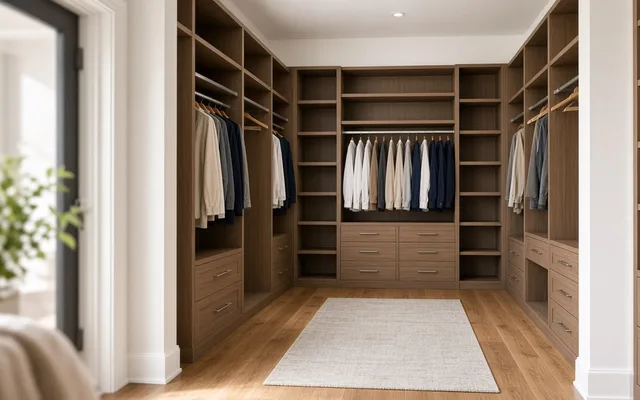
A custom closet system is shelving, rods, drawers, and doors cut and installed to the dimensions of your closet and the contents of your wardrobe.
 Service guidePantry Organization
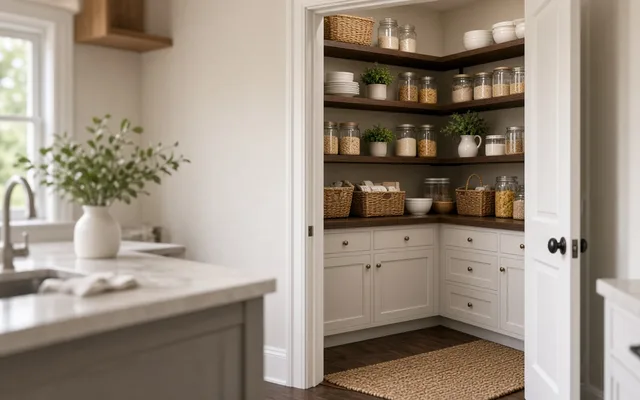
Pantry organization is the planning and fitting of a food closet, walk-in pantry, or pantry cabinet so everyday items are visible and reachable and bulk items and appliances have a place.
 Service guideGarage Storage Solutions
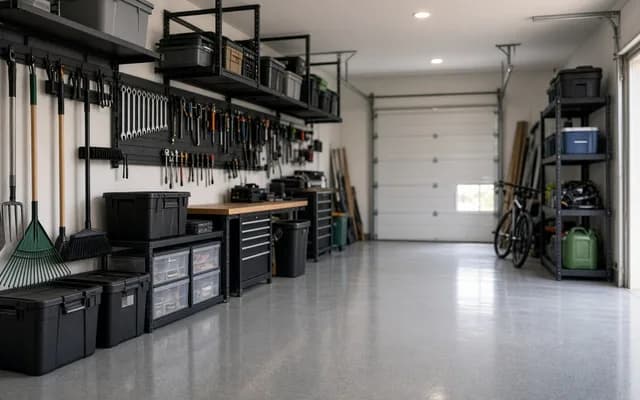
Garage storage covers wall systems, cabinets, shelving, and overhead racks that hold tools, bikes, bins, and seasonal gear while leaving room to park and move.
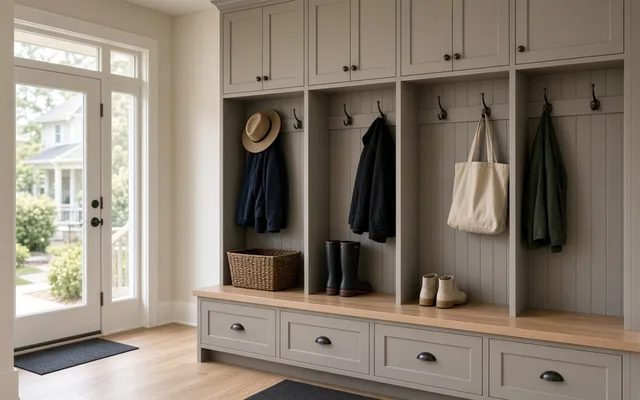 Service guideMudroom Built-Ins
Mudroom built-ins are the bench, cubbies, hooks, drawers, and cabinets that give each household member a place for coats, bags, and shoes at the door.
| Service | Best for | Skip it if |
|---|---|---|
| Custom Closet Systems | A closet whose contents you have inventoried and measured, where hanging, folded, and shoe storage need reallocating and drawers or doors are wanted. | The closet is packed beyond measuring or you plan to move within two years; sort first, or choose a modular system that comes with you. |
| Pantry Organization | A pantry or food closet where packages, appliances, and bulk items need reachable, visible shelving at the right spacing and depth. | A kitchen remodel is planned; the remodel will include pantry cabinetry and you would pay twice. |
| Garage Storage Solutions | A garage that must hold bikes, bins, tools, and seasonal gear while keeping room to park and move, with real weights listed for each item. | The ceiling or walls cannot carry the loads without structural work, or the garage floor is about to be coated; do those first. |
| Mudroom Built-Ins | An entry where coats, bags, and shoes need a per-person spot and a seat, inside an existing space or a converted garage bay or porch. | The only option is an addition and the budget is under roughly $6,500; Angi's addition range starts there, and a bench-and-hook wall in the existing entry may be the better first step. |
By the numbers
$12.05B
U.S. home organizers and storage market size, 2025
Mordor Intelligence projects $15.21 billion by 2030 at a 4.78% CAGR, with storage boxes holding 34.56% of 2024 demand. Most of the spend is products bought before shelf spacing was fixed.
Mordor Intelligence, United States Home Organizers and Storage Market (2025)$2,000
average cost of a custom pantry, $250–$5,000 range (2026)
Angi prices a reach-in at $250 to $1,500, a small walk-in at $750 to $2,000, and a large 100-square-foot walk-in at $2,000 to $3,500, or $20 to $40 per square foot with labor about $20 of that.
Angi, How Much Does a Custom Pantry Cost to Build? [2026 Data] (2026)$3,500
national average for a professionally installed garage organizer system
Fixr's $2,500 to $5,000 range describes a medium garage with workbench, shelves, cabinets, hooks, and overhead storage. Prefab overhead racks cost $75 to $400 in materials; custom cabinets $200 to $8,000.
Fixr, How much does it cost to install a garage organizer system? (2025)9 in 10
renovating homeowners who hired a professional in 2024
The 2025 Houzz & Home study found 54% of surveyed homeowners renovated and 49% used specialty service providers, the category closet and storage installers fall into. A platform sample, not all households.
Houzz, 2025 U.S. Houzz & Home Study (2025)Closets are priced per linear foot and are the most predictable: Angi's $50–$150 per linear foot and HomeGuide's $70 to $270 per foot bracket almost every quote. Pantries are priced by the square foot of floor or as cabinetry; Angi's custom pantry benchmark is $2,000 with a reach-in at $250 to $1,500 and a large walk-in at $2,000 to $3,500. The risk in both is a layout that ignores what you own.
Garages carry the most physical risk because loads are real: overhead racks over a car, cabinets full of paint, a bike lift. Fixr's $3,500 average for a medium garage with cabinets, shelves, hooks, and overhead storage assumes anchoring into framing and correct load ratings. Mudrooms cost the most per square foot because they are finish carpentry, often with flooring and seating, and an addition adds permits and structure.
| Scope | How it is priced | Published benchmark | Main risk |
|---|---|---|---|
| Custom closet systems | Per linear foot plus accessories | $50–$150/ft (Angi); $2,128 avg | Layout that ignores inventory |
| Pantry organization | Per sq ft or per cabinet | $2,000 avg; $20–$40/sq ft (Angi) | Shelf spacing wrong for packages |
| Garage storage | Per system or per cabinet | $3,500 avg (Fixr); $505–$2,164/cabinet (Angi) | Overloaded anchors, lost parking |
| Mudroom built-ins | Per built-in or per sq ft | $50–$100/sq ft conversion (Angi) | Crowded door swings, no seat |
Sort by the thing you cannot put away. Clothes and shoes go to the closet page. Food, small appliances, and bulk packages go to the pantry page even if the space is a hall closet. Anything heavy, seasonal, or wheeled goes to the garage page. Coats, bags, and shoes at the door go to the mudroom page. The room name matters less than the inventory; a hall closet full of coats is a mudroom problem, and a garage wall of clothes bins is a closet problem.
When the project crosses scopes, which is common in a whole-house reorganization, get the closets and the garage quoted separately. They are different trades with different lead times, and a single bundled number hides which part is expensive. Houzz's 2025 study found 9 in 10 renovating homeowners hired a pro and 49% used specialty providers, and its 2026 study found 54% renovated in 2025 with 50% planning to in 2026. Storage is a specialty, and specialists quote their own scope best.

Three things the homeowner supplies: an inventory with measurements, photos of the space with the doors open, and the wall type. The inventory sets the layout, the photos show the obstacles (a window, a sloped ceiling, an outlet, a water heater in the garage), and the wall type sets the anchoring. HomeGuide's $70 to $270 per linear foot range for the same closet is mostly explained by finish and accessories, but the on-site surprises that add change orders are almost all wall and obstacle problems the photos would have shown.
Measurements matter in a specific way for storage: usable, not nominal. A 60-inch closet with a 30-inch door opening has 15 inches of dead return on each side that only reaches from inside; a pantry shelf 14 inches deep hides a can behind a cereal box. Ask each estimate to show usable dimensions with doors and drawers open. The tools page has a measurement checklist.
When the problem is volume, not layout. If a closet is packed to the point that nothing can be measured, an organizer at $55 to $100 an hour per HomeAdvisor will change the inventory more than any system will. When the problem is structural, such as a garage ceiling that cannot take overhead racks or a mudroom that needs a wall moved, a contractor comes first. And when the budget is under a few hundred dollars, a second rod and better hangers beat a design consultation.
The other wrong call is buying a system for a space you will change. If a kitchen remodel is coming, do not fit out the pantry; Houzz's 2026 kitchen study found 76% of renovators added built-in features, and pantry cabinets were the most common, so the remodel will include it. The comparison pages draw these lines project by project.
Custom systems have a manufacturing lead time. California Closets cites four to six weeks from finalized design to installation; independent shops vary from one to six. Prefab systems are in stock and can be installed within days. Talker Research found 42% of Americans feel overwhelmed by a messy home and Life360 reports 17 hours a year spent hunting lost items, yet storage gets deferred because it never becomes urgent. Book it for the season you are not using the space: closets in late summer before the seasonal switch, garages in spring before the bikes come out. The polls page shows when other homeowners actually scheduled theirs.
Homeowner polls
StorageCafe found 42% of Americans feel cluttered at home, with clothing the biggest culprit.
No votes yet. Yours will be the first. · saved on this device
No votes yet. Yours will be the first. · saved on this device
The installer builds shelving, rods, drawers, and doors to a drawing and is paid per linear foot or per project. The organizer sorts, purges, and sets up routines and is paid by the hour, typically $50 to $150 per HomeGuide with a three-to-five-hour minimum. Many projects need both, in that order: organize first so the inventory is real, then install a system sized to it.
Some can; closet companies often sell garage cabinets and pantry pull-outs from the same catalog. The risk is that one product line gets applied everywhere: laminate closet panels are not rated for garage loads, and closet shelving is too deep for a pantry. Ask for separate line items per room so you can compare each against a specialist quote.
Rarely for shelving, which is furniture-like and unregulated. A mudroom addition, a new outlet for closet lighting, or moving a wall for a walk-in pantry needs a permit and a licensed trade. Angi notes permits for a mudroom addition run $125 to $1,000. Ask the estimate to state which items are permitted work and who pulls the permit.
Divide the total by the linear feet on the drawing and compare with published rates: Angi's $50 to $150 per foot for organizers and HomeGuide's $70 to $270 for custom. Then check whether the accessories are priced individually. Quotes that are far above the range are usually carrying a design fee, premium finishes, or a list price before an advertised discount; ask which.
Everything. The closet, pantry, or garage wall has to be empty for measuring and again for the install, and old shelving usually comes out the day before so patching can dry. Installers charge for time spent moving your things; Angi notes old-cabinet removal in a garage adds about $300. Box items by category so they go back in the right sections.
Yes: a second rod, shelf dividers, a shoe rack, pantry risers and clear bins, wall hooks in a garage. HomeGuide notes an inexpensive closet refresh can be $150. Beyond that, prefab systems cost $400 to $2,200 installed and a handy homeowner can assemble one. Custom laminate with drawers and scribed panels is installer work.
A reach-in closet is out for the install day and any patching beforehand, roughly one to two days. A walk-in is one to three days. A pantry is a day, plus a day for painting if shelves come out. A garage system takes one to two days and the cars stay outside for both. Ask each estimate for room downtime as a line, not just install duration.
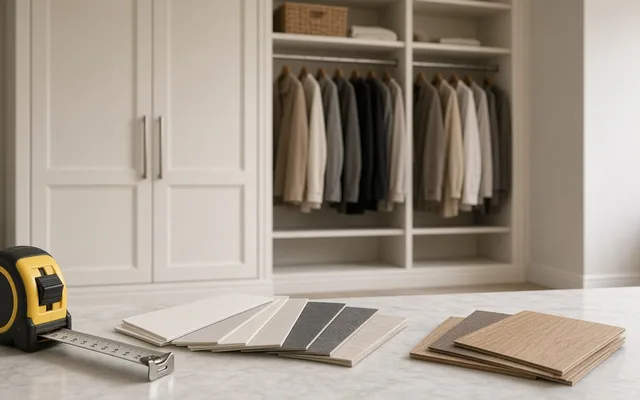 Free toolStorage cost calculator: price the system by the linear foot
Size, material tier and complexity in, a realistic budget range out.
 Free toolWhich storage option fits? Comparisons with sourced numbers
Side-by-side tables for the decisions that change the price most.
 Free toolHow well do you understand storage pricing and design?
9 questions that show what you already know and what to check next.
 Free toolPolls: how other homeowners handle storage
See what other planners chose and add your vote.
Tell us the size, the condition of what is there now, and what you want to change. Closet Flow Guide passes your request to independent local professionals, who reply with written, no-obligation estimates. The service is free to use.