Before your last storage purchase, did you measure and count what you own?
No votes yet. Yours will be the first. · saved on this device
Loading...

Closet Flow Guide · Planning quiz
This nine-question quiz checks what you know about closet cost per linear foot, what recovers at resale, how deep a pantry shelf should be, what garage racks can carry, and how long custom systems take. Every answer is explained with a published figure from Angi, HomeGuide, Fixr, NAR, NAHB, Houzz, or the EIA. It takes about five minutes.
Start the quiz0 of 9 answered
Most homeowners have bought storage before and most carry a few wrong assumptions: that a walk-in holds more per foot than a reach-in, that deeper shelves hold more food, that a rack rated for 600 pounds is fine anywhere in the ceiling. The published data corrects each. Angi's $50–$150 per linear foot per-foot range is the first number to learn, because every closet quote reduces to it.
Answer the nine questions, read the explanations, and then read the service pages with the vocabulary in place. If a question surprises you, the linked page goes deeper. The tools hub describes how the quiz fits with the calculator and comparisons.
Four themes. Pricing: per-foot rates, format ranges such as Angi's $627–$2,526 typical organizer install, and brand promotions. Resale: what NAR and NAHB say buyers value. Design rules: shelf depth and spacing, hanging depth, compartment widths. Loads and logistics: garage rack ratings, anchoring, and lead times. Each explanation names its source and year so you can check it.
The questions are multiple choice with one best answer. Some have a second answer that is close; the explanation says why the best one is best. NAR's 83% cost-recovery estimate appears because it is the number that most changes whether a closet feels like a splurge or an investment.
Because catalogs sell depth as capacity. A 24-inch shelf holds three rows of cans and hides two of them; a 12-inch shelf holds two rows and shows both. Hanging needs 24 inches of closet depth or a side-hang rod. These rules are simple and rarely stated, yet Houzz's 2026 kitchen study found 47% of renovators added pantry cabinets, most of them built at cabinet depth. The pantry page and the closet page each build on them.
Because garage storage is the one category where a mistake is dangerous. A Craftsman survey found 36% of Americans cannot park inside; our analysis of the EIA's 2024 household survey finds 32.0% of owner-occupied homes with an attached garage also keep a second refrigerator in a garage. The fix is often an overhead rack, and the rack is only as safe as the framing it bolts to and the fraction of its rating it carries. The quiz asks what to check before loading one; the garage page gives the full rule.
Under four: read the closet page and the pantry page before requesting estimates; the spacing questions will save you a system that hides your things. Four to six: you are ready to inventory; use the calculator to budget the feet. Seven or more: go straight to the request form and use the comparison pages only for the choices you are unsure about.
Angi's 2026 closet organizer, custom closet, pantry, garage cabinet, and mudroom guides; HomeGuide's closet organizer and brand guides; Fixr's closet, garage, and mudroom guides; NAR and NARI's 2025 Remodeling Impact Report; NAHB's What Home Buyers Really Want 2024; Houzz's 2026 kitchen study; the EIA's 2024 RECS, which by our count puts an attached garage in 42.9% of homes; California Closets' published 4–6 weeks lead time; and the Craftsman garage survey. Each is linked from the statistics on the service pages.
Homeowner polls
No votes yet. Yours will be the first. · saved on this device
No votes yet. Yours will be the first. · saved on this device
It shows your score at the end and does not save anything. Retake it after reading the service pages if you want to see the difference. Nothing about your answers is stored or shared.
Because California Closets publishes its four-to-six-week figure and most brands do not. It is not a claim about every installer; independents range from one to six weeks and prefab is in stock. The explanation says to ask each installer for their real lead time this season.
They come from 2024 to 2026 editions of the cited guides and studies. Laminate, hardware, and labor move with the market, so treat any figure as a planning reference rather than a fixed number. Each figure's year is given in the explanation.
Check the source, which is named in every explanation and linked from the statistics on the service pages. The quiz reports what the published sources say; if a source has updated, the site updates when it does. Disagreement is a good reason to ask a local installer how it applies to your house.
Yes; it is a public page. It is a useful five-minute primer before someone writes a request, particularly on the shelf depth and load questions, which are the ones that most often lead to a system that hides things or a rack that should not be loaded.
Not directly. The organizer decision is covered on the home page and the comparison FAQs: if the space cannot be measured because it is full, sort first at $55 to $100 an hour per HomeAdvisor, then design. The quiz assumes you know what you own.
No. The quiz is written for homeowners deciding what to ask for. Installers will find the questions basic, which is the point: the answers are what an installer assumes you know and most homeowners do not.
 Free toolStorage cost calculator: price the system by the linear foot
Size, material tier and complexity in, a realistic budget range out.
 Free toolWhich storage option fits? Comparisons with sourced numbers
Side-by-side tables for the decisions that change the price most.
 Free toolPolls: how other homeowners handle storage
See what other planners chose and add your vote.
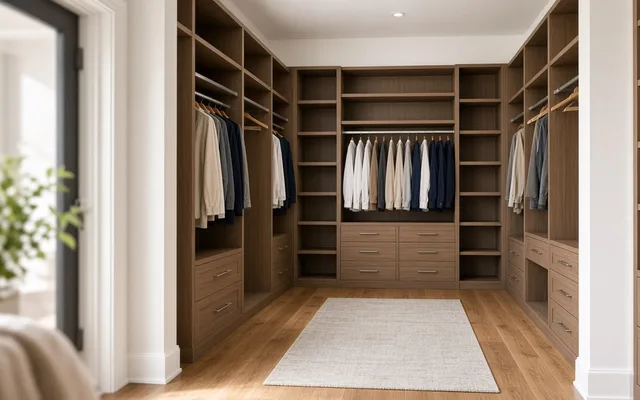 Service guideCustom Closet Systems
A custom closet system is shelving, rods, drawers, and doors cut and installed to the dimensions of your closet and the contents of your wardrobe.
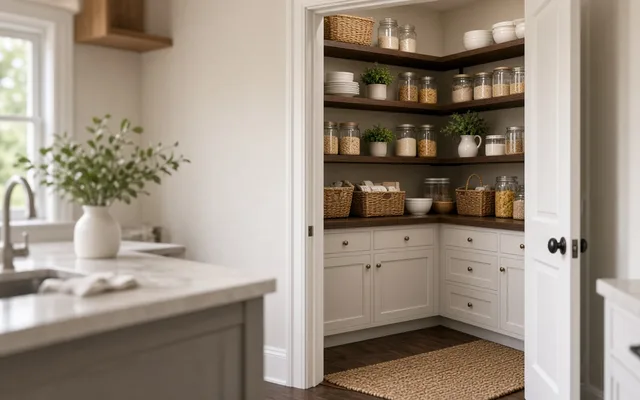 Service guidePantry Organization
Pantry organization is the planning and fitting of a food closet, walk-in pantry, or pantry cabinet so everyday items are visible and reachable and bulk items and appliances have a place.
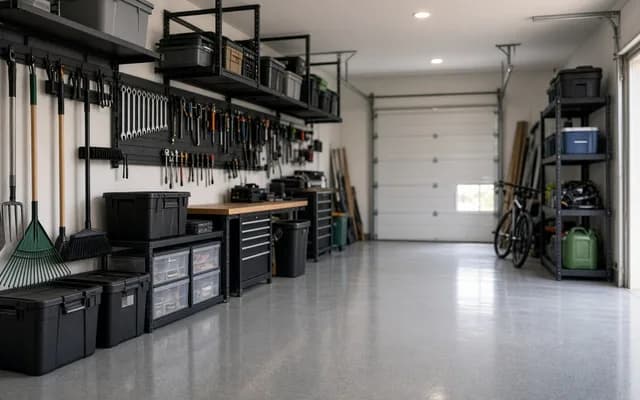 Service guideGarage Storage Solutions
Garage storage covers wall systems, cabinets, shelving, and overhead racks that hold tools, bikes, bins, and seasonal gear while leaving room to park and move.
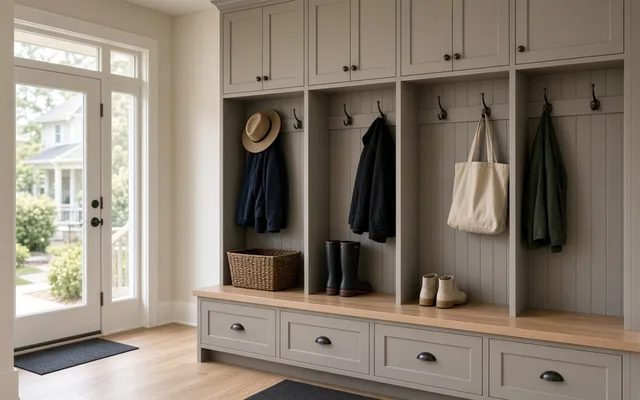 Service guideMudroom Built-Ins
Mudroom built-ins are the bench, cubbies, hooks, drawers, and cabinets that give each household member a place for coats, bags, and shoes at the door.
Tell us the size, the condition of what is there now, and what you want to change. Closet Flow Guide passes your request to independent local professionals, who reply with written, no-obligation estimates. The service is free to use.