Does your household need a mudroom or entry built-in?
No votes yet. Yours will be the first. · saved on this device
Loading...
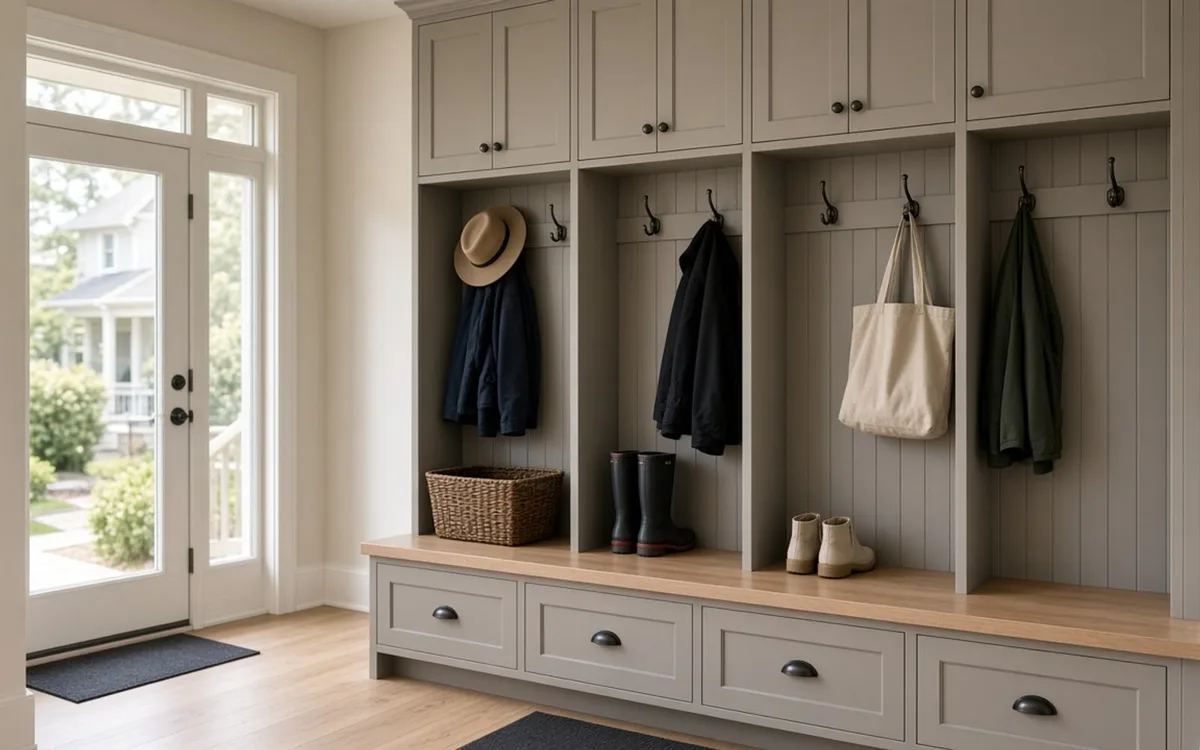
Closet Flow Guide · Mudroom Built-Ins cost guide
A prefab bench and hook wall costs a few hundred dollars installed, a custom painted built-in in an existing entry costs more depending on length and drawers, conversions run $50 to $100 per square foot per Angi, and a mudroom addition averages $12,000. Length, the number of compartments, material, doors and drawers drive the cost of a built-in.
Mudroom costs span two orders of magnitude. The same function, a place per person for coats, shoes and bags, can come from a prefab bench, a custom built-in, a converted garage corner or a new room with a foundation. Choosing the scope is the biggest cost decision by far, and it is covered in the addition versus conversion comparison.
This page focuses on the cost of each scope, the material tiers, the add-ons that matter, the labor share, how timing affects the bill, what to cut first and sample budgets. The cost table and calculator further down show the published line items; the text here explains how to turn them into a plan for your own entry and household.
| Item | Low | High | Unit | Notes |
|---|---|---|---|---|
| Bench and hook wall, prefab | $200 | $800 | per entry | Retail units plus installation; confirm on estimate |
| Custom painted built-in, existing entry | $1,500 | $6,000 | per entry | Finish carpentry; scales with length and drawers |
| Conversion of garage or porch space | $50 | $100 | per sq ft | Angi 2026; about half the cost of an addition |
| Small conversion with ready-made shelves (36 sq ft) | $3,600 | $3,600 | per project | Fixr 2025 starting point |
| Mudroom addition | $6,500 | $18,000 | per project | Angi 2026; $12,000 average |
| Addition, per square foot | $100 | $300 | per sq ft | Angi 2026 |
| Permits for an addition | $125 | $1,000 | flat | Angi 2026 |
Prefab bench and hook units with installation are the cheapest scope. Custom painted built-ins in an existing entry cost more and scale with length, drawers and doors. Conversions of garage or porch space run roughly $50 to $100 per square foot according to Angi. A mudroom addition averages $12,000, and Fixr reports a typical 60-square-foot addition with cubbies for four at $14,500. Those figures cover the whole room, not just the cabinetry inside it.
Most households find the right scope in the first two categories, because a wall of cubbies and a bench along an existing entry handles the daily flow of coats and bags. Conversions suit homes with a garage entry or an enclosed porch that can be adapted with a washable floor and some heat. Additions suit homes with no usable entry space at all, or projects where a new laundry or garage work is already planned.
Entry tier uses prefab laminate or MDF units with hooks, a bench and a shelf. Mid tier uses custom laminate or painted MDF built to fit the wall, with per-person cubbies, a bench and shoe storage below. Upper tier uses painted plywood or solid wood, lockers with doors, drawers and trim that matches the house's existing millwork. Each tier adds both material cost and carpentry time. Mid tier is where most custom mudrooms land, and it is the level most households find good value; for scale, Angi prices a fitted MDF closet organizer at $1,000–$2,500.
Durability matters more in a mudroom than in a closet. Wet boots, backpacks, hockey bags and dogs knock the surfaces every day. Painted plywood or solid wood can be sanded and repainted when it chips; laminate chips are harder to repair invisibly. The materials guide explains the trade-offs and which parts of a built-in deserve the tougher material. Many carpenters use plywood for benches and uprights and laminate or MDF for shelves and backs.
Shoe storage under the bench, a boot tray, hooks rated for heavy bags and overhead cubbies for seasonal items matter most, because they handle the things that otherwise end up on the floor. Doors on lockers hide clutter but add cost per compartment. Drawers add cost and suit small items such as gloves, hats and dog leashes, the things behind the 17 hours a year Life360 says Americans spend hunting for lost items. Houzz found 17% of kitchen renovators added built-in seating, often from the same carpenters. A charging shelf needs an outlet, which may require an electrician and a permit.
In snowy climates, a drain or a large boot tray, a washable floor and ventilation for wet coats matter more than the finish on the cabinetry. Interest in built-ins is broad: Houzz's 2026 study found 76% of kitchen renovators added built-in features, and many mudroom built-ins are designed alongside those kitchen and laundry projects. A washable wall finish behind the hooks is worth budgeting for, since wet coats stain painted drywall quickly.
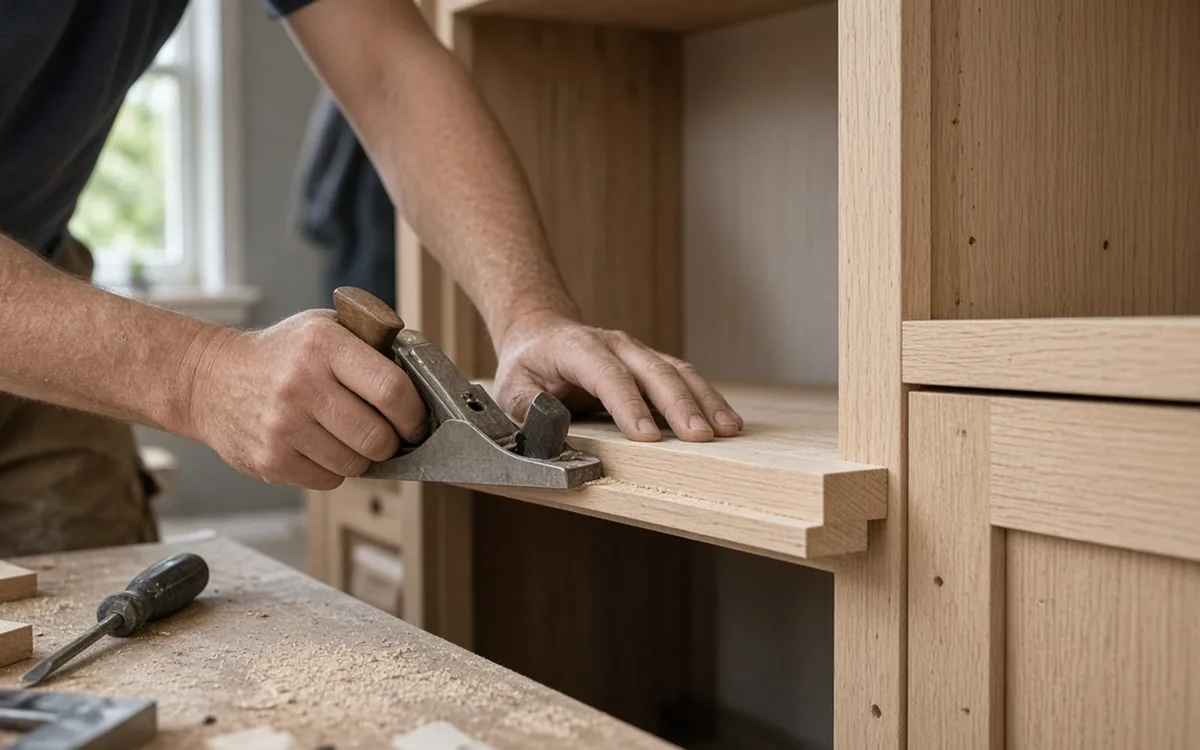
Custom built-ins are labor-heavy. A finish carpenter builds, fits, scribes to the walls and paints, either on site or in a shop, which takes days rather than hours. Paint needs time to cure before the built-in takes daily use. Labor is often the larger share of a custom built-in, the reverse of a closet system. Prefab units need far less labor; conversions add flooring, lighting and possibly framing trades.
Additions are dominated by construction labor and materials across several trades: foundation, framing, roofing, windows, insulation, electrical and finishes. Angi's cost table lists permits for an addition at roughly $125 to $1,000. Ask any contractor bidding an addition to break out the built-in cabinetry separately, so you can compare it with a carpenter's price for the same built-in. Contractors also add overhead and profit, typically as a percentage of the whole job.
Prefab units install in an afternoon. Custom built-ins depend on the carpenter's backlog, which can add several weeks before work starts, plus a few days for paint to cure. Conversions take weeks once flooring and electrical are involved. Additions take months, including plan review and inspections. Rushing a custom built-in rarely saves money and can lead to paint that has not hardened before daily use. Build the paint cure into the schedule before the family starts using it.
Seasonal timing matters too. Many households want a mudroom finished before winter, which crowds finish carpenters' schedules in the fall. Planning and booking in spring or early summer usually makes scheduling easier and leaves time for competing bids. Angi puts mudroom addition permits at $125 to $1,000, and Fixr prices a typical 60-square-foot addition with cubbies at $14,500. For an addition, start the permit process well ahead so construction is not pushed into the coldest months. Painted finishes also cure better in warm, dry months, which reduces early chips and marks.
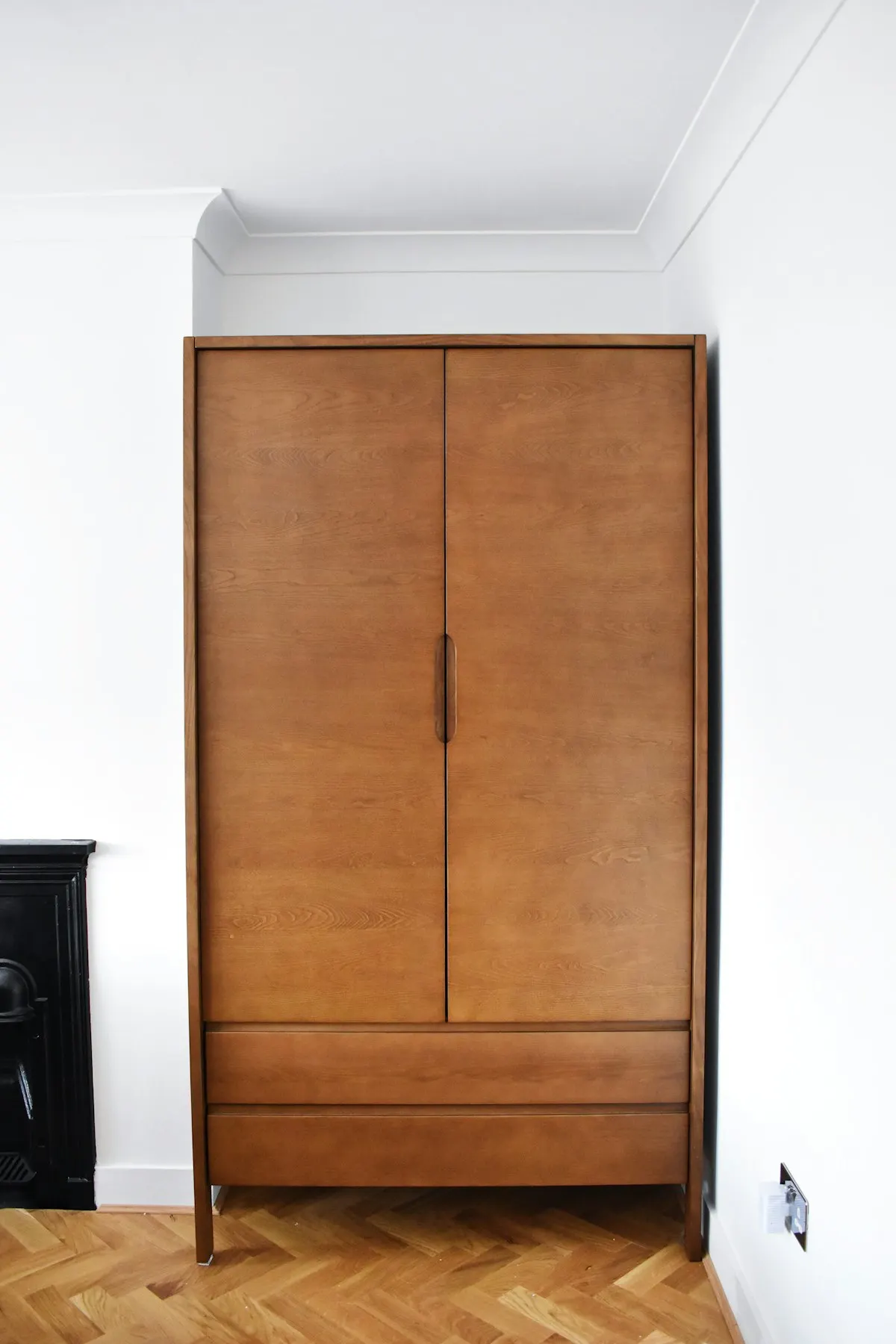
Cut locker doors, decorative trim and drawers before cutting compartments. Replacing doors with open cubbies and baskets saves money and is often easier for children to use. Painted MDF instead of solid wood saves on material but gives up some durability on high-contact parts. Keep enough compartments, a sturdy bench, shoe storage and finishes that can handle water and knocks. Hooks are the cheapest part of the build, so add more rather than fewer.
Avoid shrinking compartments below what winter coats and school bags actually need. A mudroom that is too small fails on its first busy morning, and the overflow ends up on the floor or the kitchen chairs. The mudroom built-ins page covers compartment widths, bench height and hook spacing so that any savings come from finish rather than function. Count gear on a winter weekday, not a summer one.
A prefab bench with hooks and a shoe shelf in a garage entry, the route in for many of the 42.9% of homes our analysis of the EIA's 2024 survey finds have an attached garage, costs a few hundred dollars including installation. A six-foot custom painted built-in with a bench, four cubbies, hooks and overhead storage lands in the low thousands, depending on material and the carpenter's rate. A converted garage corner with new flooring, lighting and a built-in lands higher, scaled by square footage at Angi's conversion rates.
An addition follows Angi's and Fixr's addition figures and depends heavily on foundation type, roof tie-in and finishes. Use the cost calculator to price built-in footage and the request form to get written estimates from local carpenters and remodelers for the scope you choose. Ask for fixed-price bids where possible.
By the numbers
Planning figures from published U.S. sources; every card links to where the number came from.
$12,000
average mudroom addition cost; conversions run $50–$100 per sq ft (2026)
Angi puts an addition at $6,500 to $18,000 or $100 to $300 per square foot, a conversion of existing garage or porch space at about half, and permits at $125 to $1,000. Most households need the built-in, not the addition.
Angi, How Much Does a Mudroom Addition Cost? [2026 Data] (2026)$14,500
typical cost of a 60 sq ft mudroom addition with built-in cubbies for four
Fixr's $12,000 to $18,000 range includes cubbies, new flooring, and a baseboard heater. A 36-square-foot conversion with ready-made shelves starts near $3,600.
Fixr, Mudroom Addition Cost (2025)76%
of surveyed kitchen renovators added built-in features (2025–2026 projects)
Pantry cabinets led at 47%, followed by beverage stations at 24%, built-in seating and wine refrigerators at 17% each, and walk-in pantries at 16%. A platform sample; built-ins can coexist.
2026 U.S. Houzz Kitchen Trends Study (2026)$1,000–$2,500
MDF closet organizer, installed (Angi 2026)
MDF organizer: $1,000–$2,500 (Projects described by publisher, Guide updated April 6, 2026). Source: Angi closet organizer cost guide.
Angi closet organizer cost guide (2026)The calculator uses the same closet and home organization benchmarks as this guide. Set the size and tier, then request a written estimate to check it against a real proposal.
Homeowner polls
No votes yet. Yours will be the first. · saved on this device
Angi puts a mudroom addition at $12,000 on average and a conversion at about half.
No votes yet. Yours will be the first. · saved on this device
A standalone custom bench with shoe storage costs less than a full built-in with cubbies and overhead storage, and the price depends on length, material and finish. Ask carpenters for a bench-only price if that is all you need; a bench plus a rail of hooks above it covers the basics for many smaller households.
Lockers with doors hide clutter and look finished from the kitchen, but they cost more per compartment and add hinges that need occasional adjustment. Open cubbies are cheaper and easier for children to use, since nothing has to be opened or closed. Many families choose open cubbies below and doors only on the upper seasonal storage.
A simple bench and a row of hooks is a manageable DIY project with basic tools. A custom built-in with cubbies, scribed edges and a painted finish requires real carpentry skill, a good saw setup and patience with paint. Prefab units assembled and anchored to studs are the practical middle ground for most DIYers.
A built-in against an existing wall usually does not, since it counts as finish work. Adding an outlet or light, enclosing a porch, converting a garage bay or building an addition usually does. Rules vary by jurisdiction, so check with your building department. The permits guide on this site explains the common triggers.
Luxury vinyl plank and sealed concrete are the most cost-effective washable options, and both handle water and grit well. Porcelain tile costs more to install but lasts longer and resists salt. If the existing floor is already durable and water resistant, keeping it and adding a boot tray is the cheapest choice of all.
It is worth it when there is no other usable entry space, in snow climates that need a heated and drained room, or when it is combined with other planned work such as a laundry. As a standalone project for hanging coats, the cost is hard to recover and a built-in usually delivers most of the benefit.
Keep the footprint small and rectangular, combine the work with other planned projects so trades are already on site, use standard window and door sizes, and choose durable but moderate finishes. Put the built-in cabinetry out to a separate carpenter bid as well, since general contractors sometimes mark up millwork significantly.
 Custom Closet Systems · Cost guideHow much a custom closet costs in 2026, and where the money goes
Angi's 2026 data puts the average custom closet at $2,128, with most projects between $1,046 and $3,210, and installed organizers at $50 to $150 per linear foot.
 Pantry Organization · Cost guideWhat pantry organization costs in 2026, from a hall closet to a walk-in
Angi's 2026 data puts pantry organizer systems at $1,000 to $3,000 installed and a custom pantry at an average of $2,000, with reach-in fit-outs from about $250.
 Garage Storage Solutions · Cost guideWhat garage storage costs in 2026, and how to phase the spending
Fixr puts the average professionally installed garage system at about $3,500, with whole-garage prefab materials at $2,300 to $6,300 and custom at $2,900 to $8,200.
 Service guideMudroom Built-Ins
Mudroom built-ins are the bench, cubbies, hooks, drawers, and cabinets that give each household member a place for coats, bags, and shoes at the door.
Service guideCustom Closet SystemsA custom closet system is shelving, rods, drawers, and doors cut and installed to the dimensions of your closet and the contents of your wardrobe.
Service guideGarage Storage SolutionsGarage storage covers wall systems, cabinets, shelving, and overhead racks that hold tools, bikes, bins, and seasonal gear while leaving room to park and move.
 Free toolStorage cost calculator: price the system by the linear foot
Size, material tier and complexity in, a realistic budget range out.
 Free toolWhich storage option fits? Comparisons with sourced numbers
Side-by-side tables for the decisions that change the price most.
 Free toolHow well do you understand storage pricing and design?
9 questions that show what you already know and what to check next.
 Free toolPolls: how other homeowners handle storage
See what other planners chose and add your vote.
Tell us the size, the condition of what is there now, and what you want to change. Closet Flow Guide passes your request to independent local professionals, who reply with written, no-obligation estimates. The service is free to use.