Which space in your home overflows first?
StorageCafe found 42% of Americans feel cluttered at home, with clothing the biggest culprit.
No votes yet. Yours will be the first. · saved on this device
Loading...
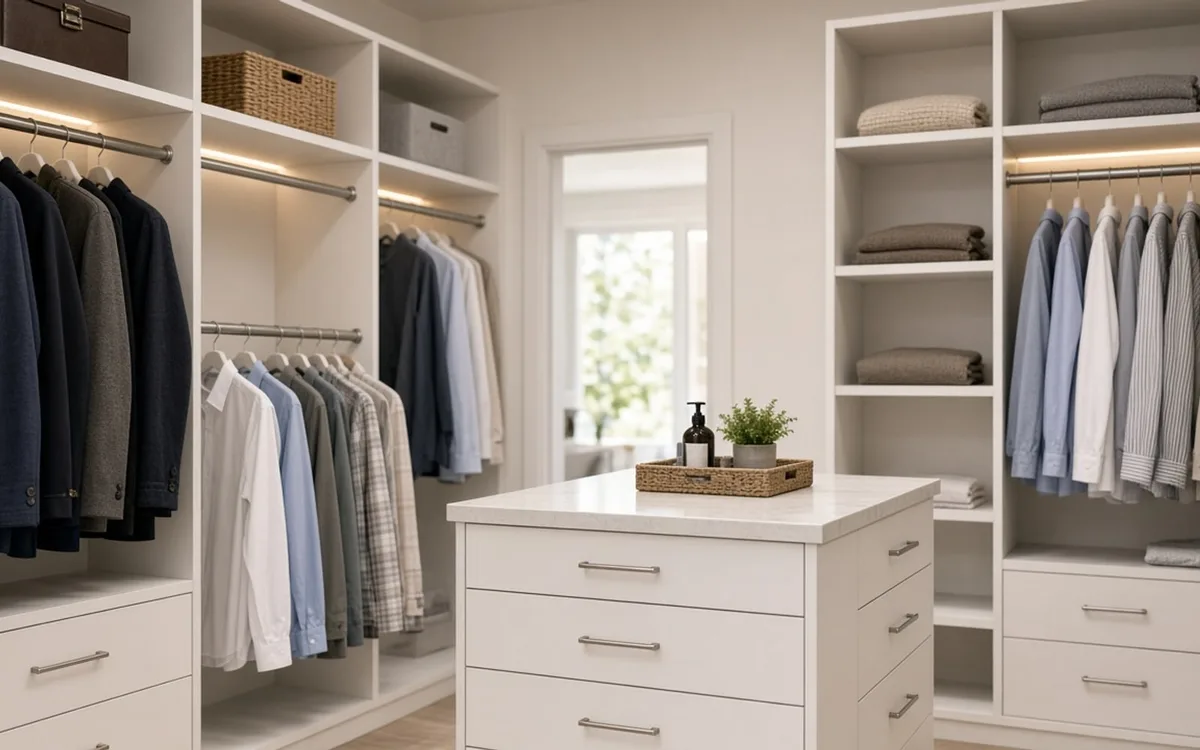
Storage that fits what you own and how you put it away.
Closet Flow Guide is a planning resource for U.S. homeowners fitting out closets, pantries, garages, and entryways. It explains how closet systems are priced per linear foot, what wire, laminate, and wood really cost according to published 2025–2026 guides, and how to inventory a space before anyone sells you shelving. When you are ready, the request form matches you with independent local professionals for a free written estimate, no obligation.
By the numbers
Every figure links to its published source.
$2,128
national average custom closet installation, most paying $1,046–$3,210 (2026)
Angi's 2026 benchmark is a closet installation reference; design-only fees, whole-home organizing, and several rooms of fitted cabinetry are separate scopes. Use it as a sanity check on a single-closet quote.
Angi, How Much Do Custom Closets Cost? (2026)$3,000
national average to build a custom closet, $1,500–$4,500 typical
HomeGuide prices custom closets at $25 to $35 per square foot with a full span of $250 to $20,000. Adding custom storage to an existing closet runs $400 to $8,000.
HomeGuide, How Much Does a Custom Closet Cost? (2024)$2,000
national average installed closet organizer: a 12-foot laminate system with lighting
Fixr's typical range is $1,000 to $3,000; prefab units run $200 to $1,900 installed and custom systems $500 to $10,000, topping $20,000 for luxury wood. A useful middle case for a primary reach-in.
Fixr, Cost to Install Closet Organizers (2025)83%
estimated cost recovered on a closet renovation at resale (2025)
NAR and NARI's 2025 Remodeling Impact Report ranks closet renovation second for cost recovery, behind only a new steel front door at 100%. It assumes a clean, neutral system in the primary bedroom.
National Association of Realtors, 2025 Remodeling Impact Report press release (2025)Most storage projects start backwards: a homeowner sees a showroom closet, orders something similar, and discovers a month later that the long-hang section is empty and the shoes still live on the floor. StorageCafe's 2025 demand survey found 33% of Americans rent a self-storage unit and 42% say they feel cluttered at home, with clothing the biggest culprit. The units cost money every month; the closets that should hold those clothes were often designed for a different wardrobe.
This site starts with the inventory. It shows how closet systems are actually priced (per linear foot, with drawers, doors, and lighting as the multipliers), what the major brands and independent installers charge according to HomeGuide, Angi, Fixr, and Bob Vila, and how to measure a space so the estimate reflects your things rather than a catalog layout. Use the linear-foot calculator for a first budget, the comparisons to settle custom-versus-prefab and wire-versus-laminate questions, and the estimate request when your list is ready.
Closet Flow Guide ran these numbers on the federal government's own household data. You won't find them in a contractor's brochure.
Closet Flow Guide analysis · 2024
95% interval 30.5%–33.5% · about 16.6 million homes · 7,070 survey households
About one in three homes with an attached garage keeps a second refrigerator there. Plan a dedicated outlet, a level pad and a floor coating that tolerates condensation where it will stand.
Source: Closet Flow Guide analysis of 2024 federal household survey data from the U.S. Energy Information Administration. How we calculated it
Each guide covers what it costs, what fails first, and how to compare written proposals.
 Service guideCustom Closet Systems
A custom closet system is shelving, rods, drawers, and doors cut and installed to the dimensions of your closet and the contents of your wardrobe.
 Service guidePantry Organization
Pantry organization is the planning and fitting of a food closet, walk-in pantry, or pantry cabinet so everyday items are visible and reachable and bulk items and appliances have a place.
 Service guideGarage Storage Solutions
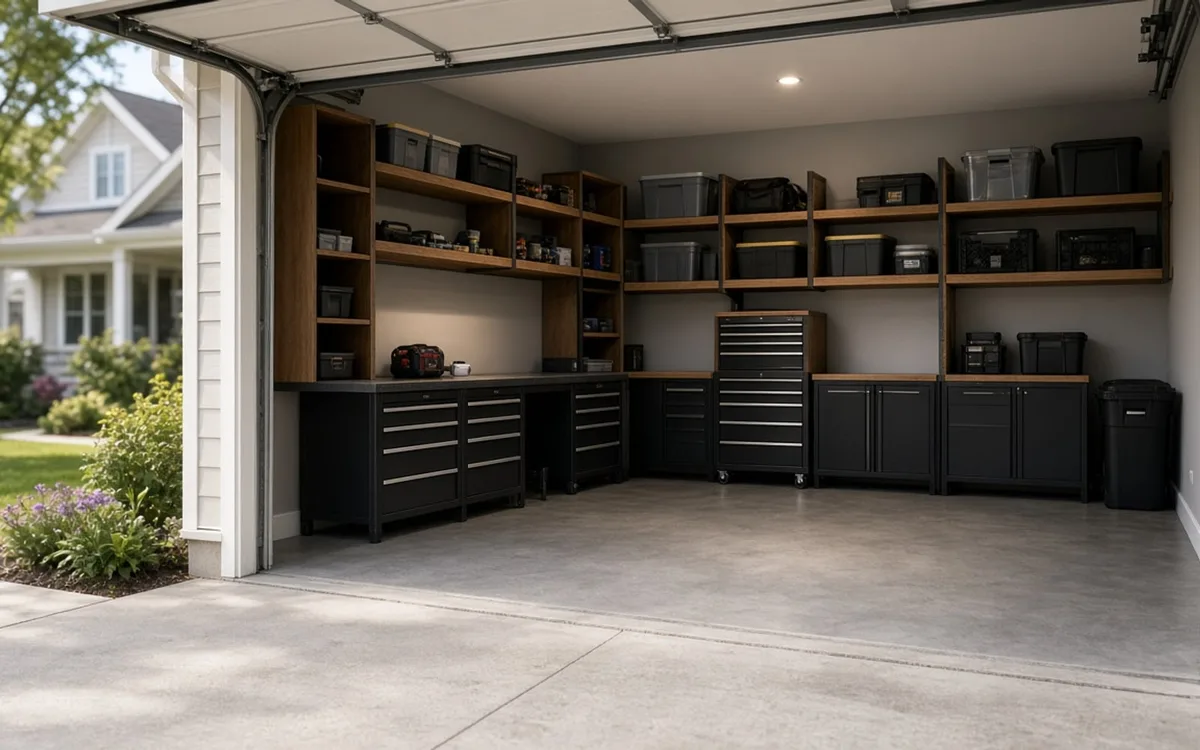
Garage storage covers wall systems, cabinets, shelving, and overhead racks that hold tools, bikes, bins, and seasonal gear while leaving room to park and move.
 Service guideMudroom Built-Ins
Mudroom built-ins are the bench, cubbies, hooks, drawers, and cabinets that give each household member a place for coats, bags, and shoes at the door.
The published guides agree more than the showroom quotes suggest. Angi's 2026 custom closet benchmark puts the average installation at $2,128, with most homeowners paying $1,046 to $3,210. Angi's separate closet organizer guide reports a $1,542 average inside a $627–$2,526 typical range and prices the work at $50–$150 per linear foot. HomeGuide lands a little higher at a $3,000 average and $70 to $270 per linear foot for customizing an existing closet.
The spread between those numbers is not disagreement; it is the difference between a reach-in with wire shelving and a walk-in with drawers, doors, and lighting. Fixr's $2,000 national average describes a 12-foot laminate system with lighting, which is a typical primary-bedroom reach-in. A walk-in of 30 linear feet runs $2,100 to $8,000 per HomeGuide, and the same footage in premium wood veneer with glass-front drawers can pass $14,000 at brand installers.
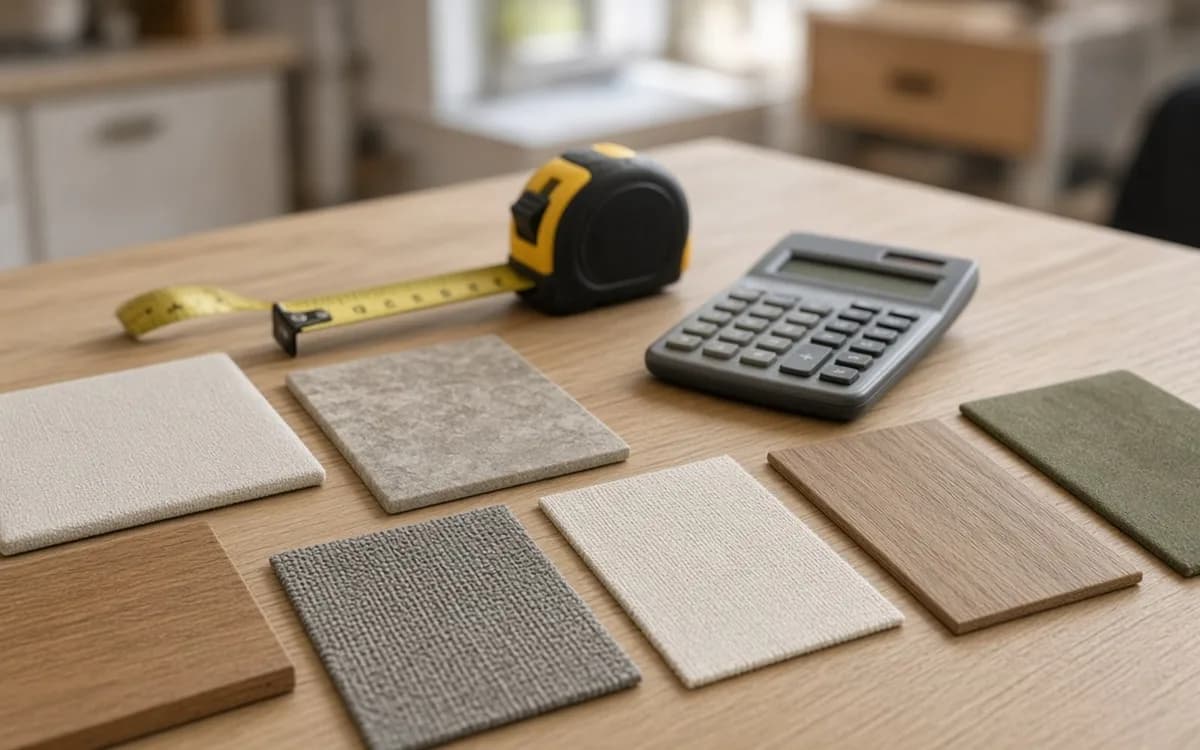
The number to carry in your head is the per-foot rate for the material you want, multiplied by the feet of wall you can actually use. Everything else on this page is about getting both of those numbers right before a designer arrives with a tablet. The custom closet page walks through the measurement.
| Scope | Published range | Basis | Source |
|---|---|---|---|
| Custom closet installation | $1,046–$3,210 | $2,128 average | Angi 2026 |
| Closet organizer, all types | $627–$2,526 | $50–$150 per linear foot | Angi 2026 |
| Reach-in organizer | $800–$2,500 | 6–8 linear feet typical | Angi 2026 |
| Walk-in organizer | $2,000–$5,500 | 20–30 linear feet typical | Angi 2026 |
| Custom closet build | $1,500–$4,500 | $25–$35 per sq ft; $3,000 average | HomeGuide 2024 |
| Prefab system installed | $400–$2,200 | Labor $200–$1,600 | HomeGuide 2025 |
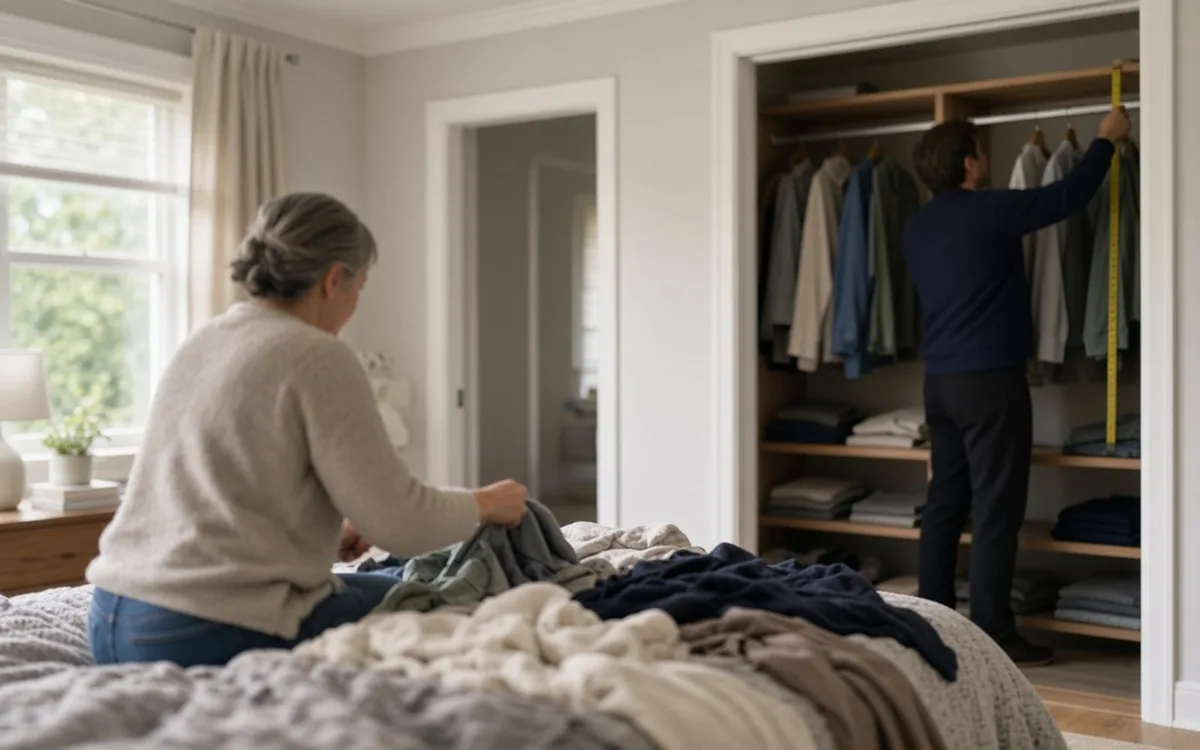
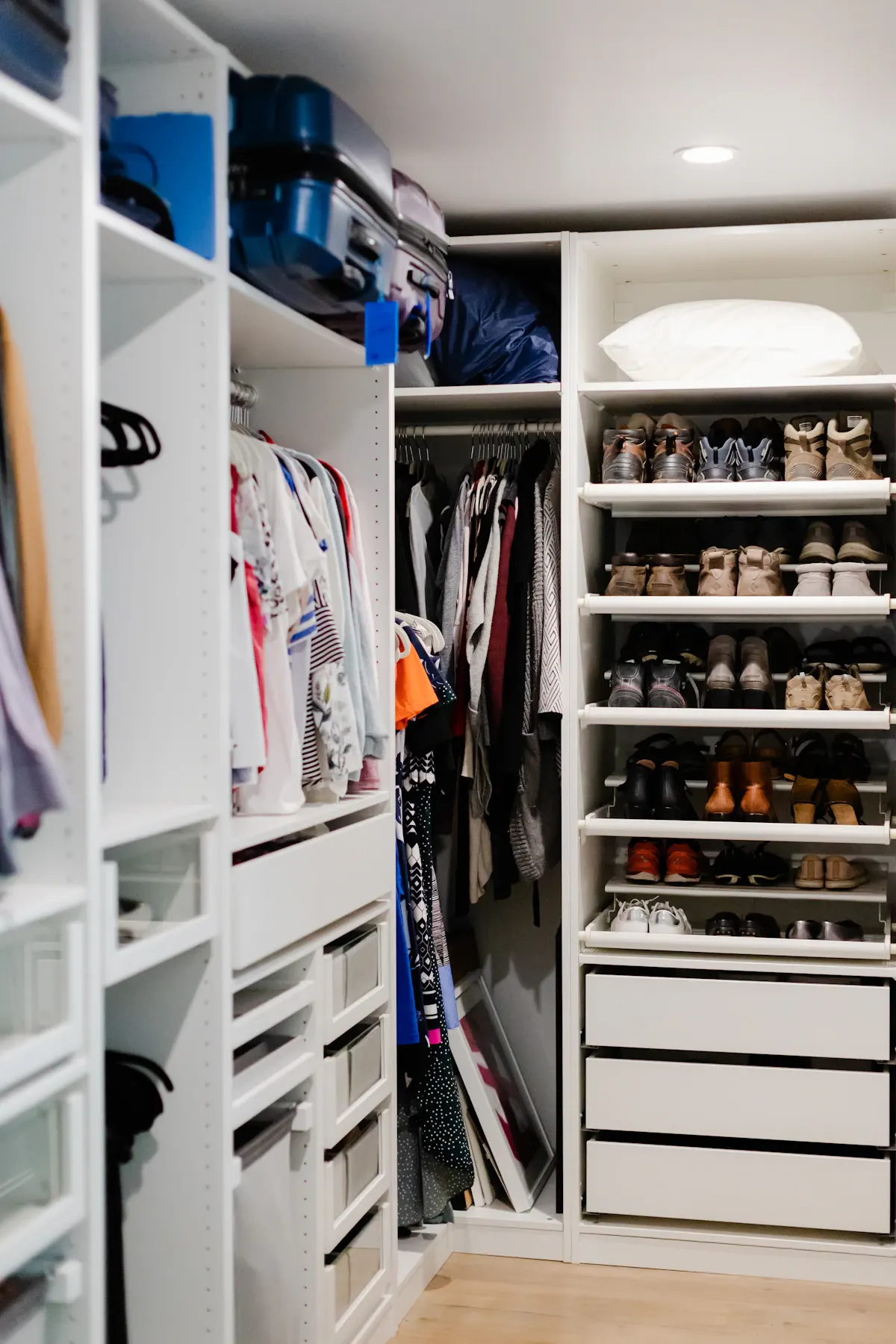
Because the layout is only as good as the count it is based on. A designer who knows you own 40 inches of long-hang, 90 inches of short-hang, 22 pairs of shoes, and six bulky sweaters can allocate the wall in minutes. One who guesses will give you the showroom default, which is usually too much long-hang, too few drawers, and a shoe section sized for a display rather than a family. The inventory takes an hour with a tape measure and a notepad.
Measure hanging clothes by the inch along the rod, folded items by the stack, and shoes by the pair, then note the bulky and awkward things: boots, a garment bag, a suitcase, a vacuum. Those are what break a standard layout. Life360's summary of a Shane Co. survey found people spend about 17 hours a year looking for lost items; a closet designed from an inventory gives every category a labeled home, which is the whole point of paying for it. The planning tools include a printable inventory sheet.
The inventory also tells you which storage you do not need. A household with no long dresses and no suits does not need 60 inches of long-hang. A pantry that holds mostly cans and boxes needs shallow shelves at tight spacing, not deep cabinets that hide everything in the back. Buying less, correctly sized, is where most of the savings on a storage project come from.

Wire is the cheapest and the most forgiving to change later. Angi prices a wire organizer at $800 to $2,000 installed and HomeGuide notes wire prefab systems start at $150 in materials. It sags under heavy folded stacks, leaves lines on soft sweaters, and cannot take drawers or doors gracefully, but for a guest room, a kid's closet, or a rental it is often the right call. The wire versus laminate comparison runs the numbers.
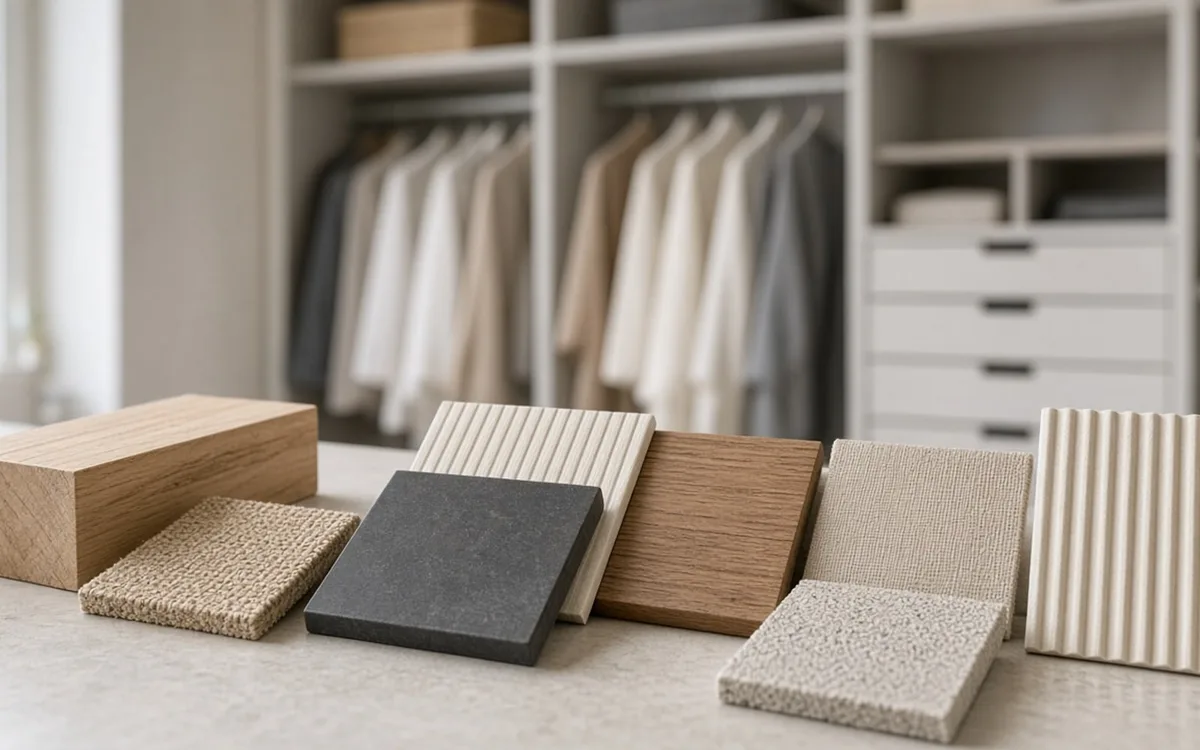
Laminate (melamine over particleboard) is the most popular custom material by a wide margin. Angi prices a laminate organizer at $1,200–$3,500 and Fixr's $2,000 average assumes it. It takes drawers, doors, and adjustable shelving, comes in dozens of finishes, and holds up for decades if it stays dry. HomeGuide notes premium colors add 10% to 20% and wood-grain textures up to 40% on top of base white.
Real wood and veneer are the premium tier, with Fixr noting luxury wood systems can top $20,000. They look better in a walk-in that doubles as a dressing room and worse in a humid coastal closet where solid wood moves seasonally. Most homeowners are best served by laminate in the primary closet, wire everywhere else, and wood only where it will be seen every day.
The inventory rule holds; only the items change. A garage holds bikes, bins, tools, and often a second refrigerator: our analysis of the federal government's 2024 household survey found one in the garage of 15.1% of U.S. homes, and in 32.0% of owner-occupied homes with an attached garage. A Craftsman survey found 36% of Americans can no longer park inside, and Fixr puts a professionally installed garage system at $3,500 on average. The garage storage page covers weights, anchoring, and the vehicle clearances that a wall-of-cabinets layout tends to forget.
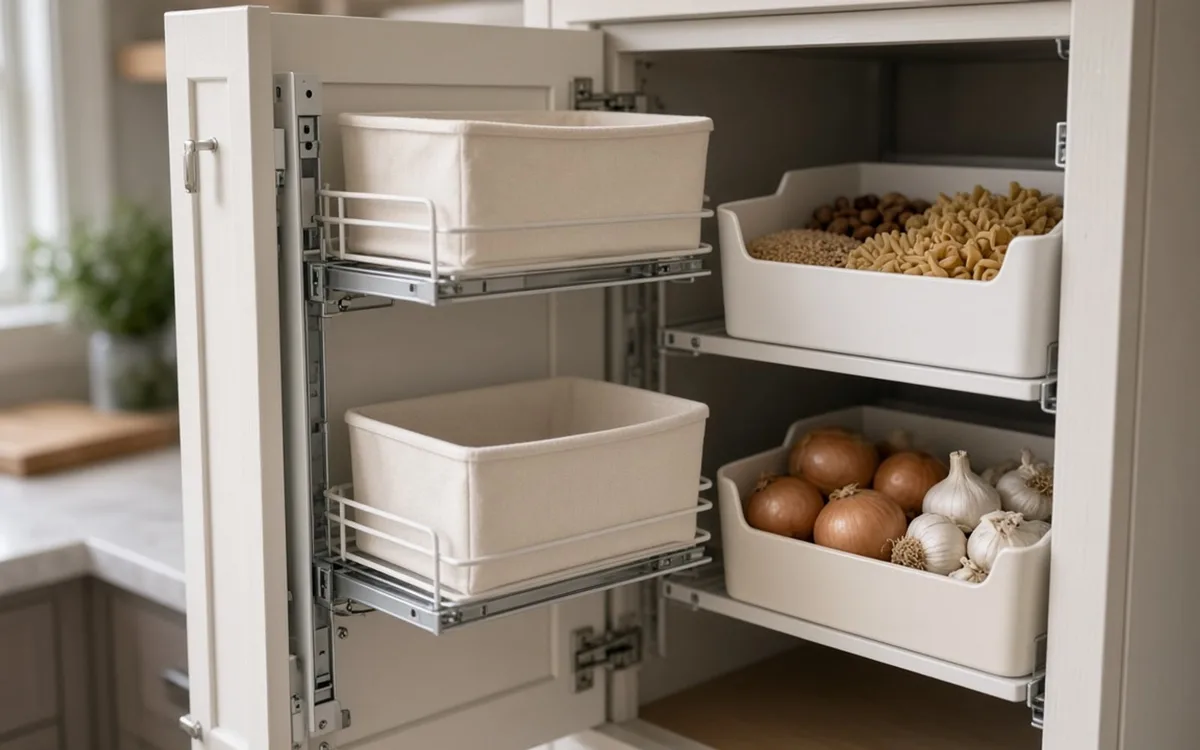
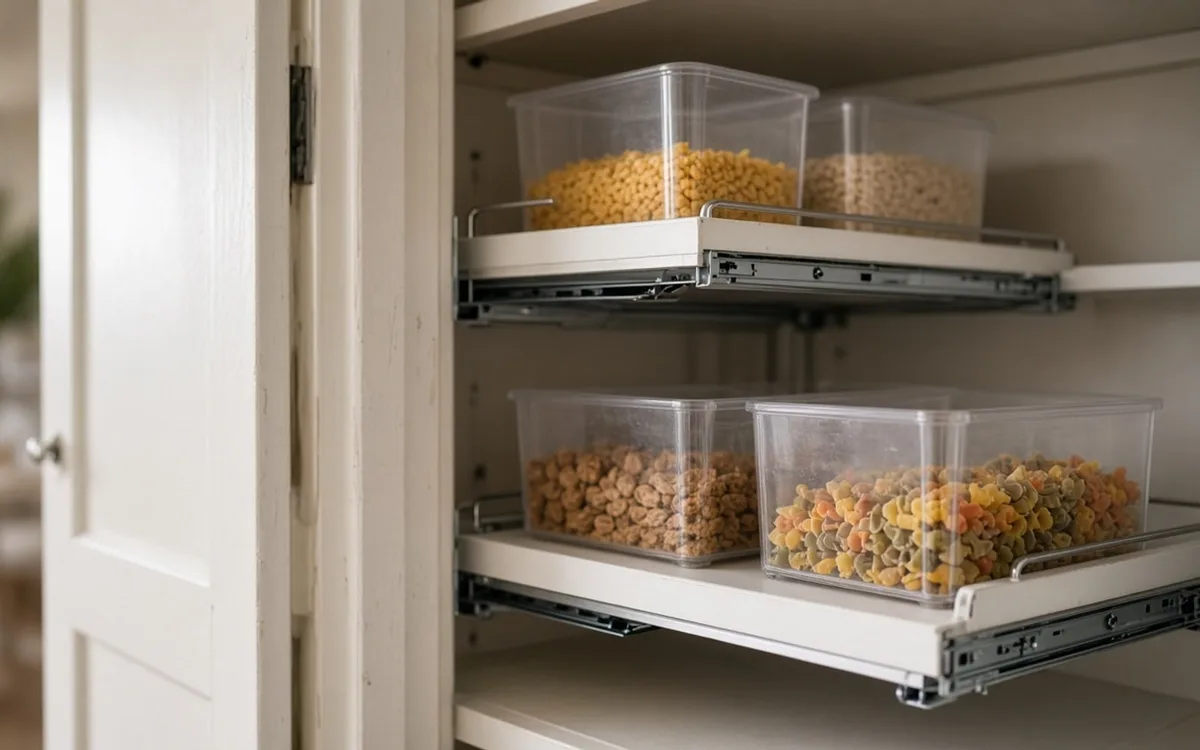
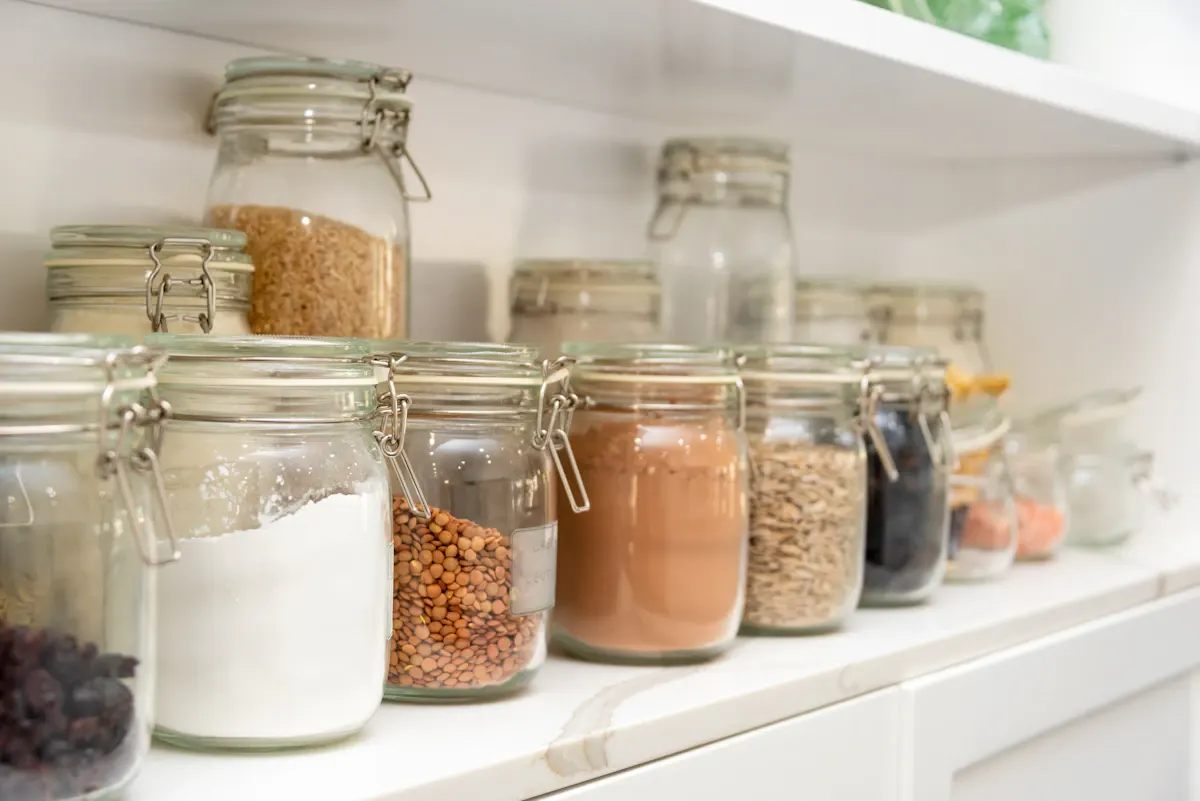
A pantry is an inventory of packages and appliances rather than clothes. Houzz's 2026 kitchen study found 47% of renovating homeowners added pantry cabinets and 16% a walk-in pantry, while Angi prices a custom pantry at $2,000 on average. Shelf spacing and depth decide whether a pantry works; the pantry page explains how to measure the cereal boxes and the stand mixer before fixing the shelves.
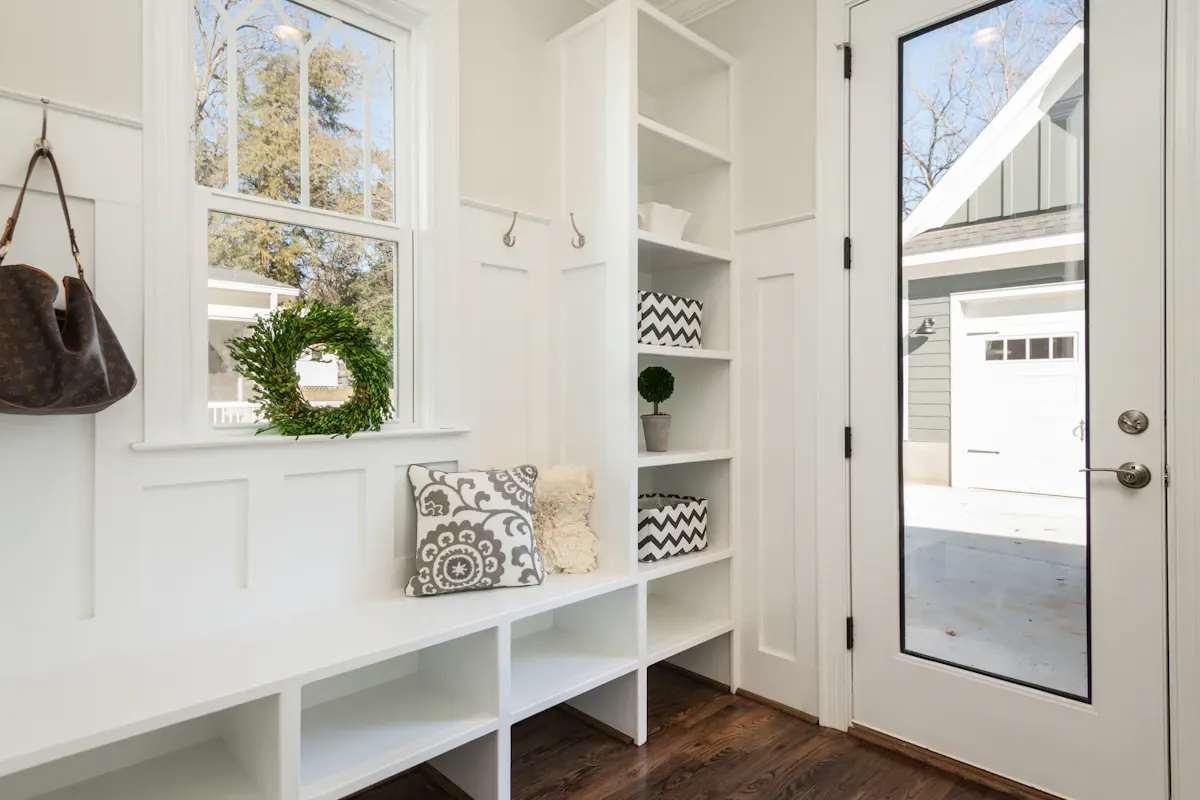
A mudroom is an inventory of the household's daily route: coats, bags, shoes, dog leash, mail. Angi puts a mudroom addition at $12,000 on average but a conversion of existing garage or porch space at half that, and a bench-and-cubby built-in inside an existing entry is a fraction of either. The mudroom page shows how to size compartments per person rather than per wall.
Better than most interior projects. NAR and NARI's 2025 Remodeling Impact Report estimates a closet renovation recovers 83% of its cost at sale, second only to a new steel entry door. NAHB's What Home Buyers Really Want study found 81% of buyers rate garage storage essential or desirable and 80% say the same of a walk-in pantry. Buyers are not paying for laminate; they are paying for not having to solve the problem themselves.
The other return is the storage bill you stop paying. SpareFoot's 2026 industry data puts the average 10x10 self-storage unit at $119 per month, about $1,400 a year, and PwC's Emerging Trends report cites the Self Storage Association's finding that 13.4% of households rent a unit, up from 11.1% in 2022. A $2,000 closet or a $3,500 garage system that empties a unit pays for itself in two or three years.
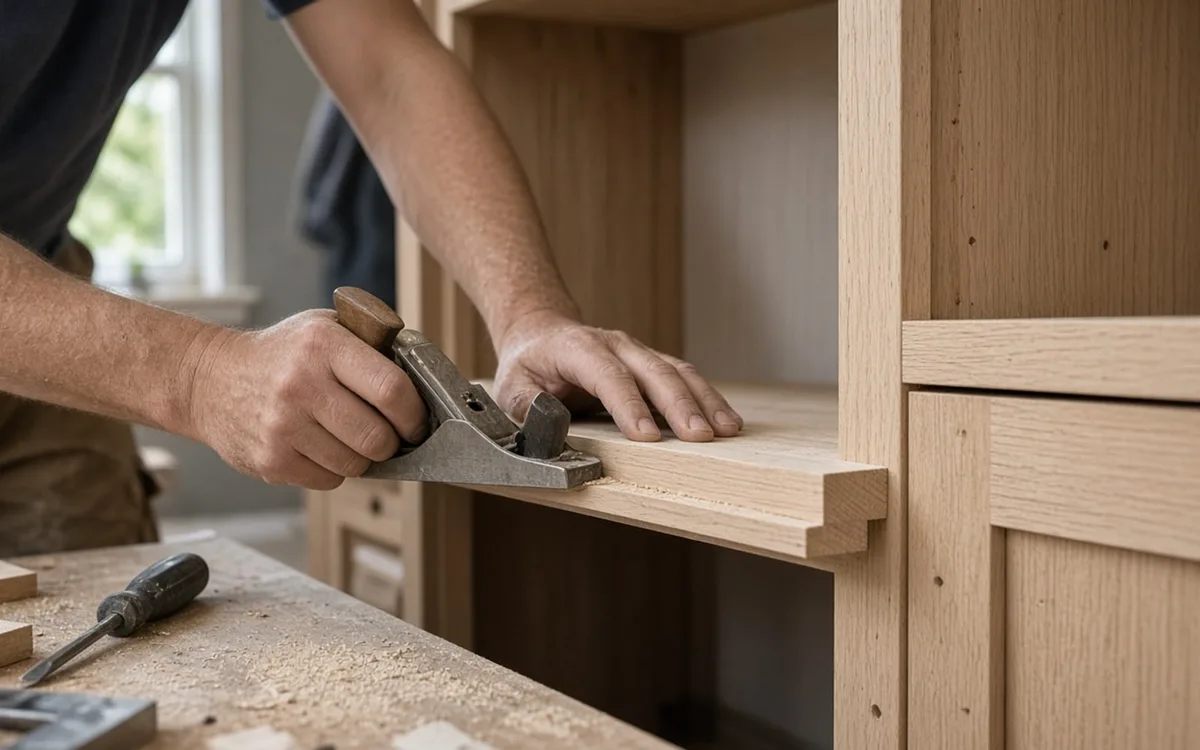
Longer than the install day suggests. California Closets says most installations are scheduled 4–6 weeks after the design is finalized, after a roughly 90-minute design consultation. Independent installers and prefab systems move faster: HomeGuide reports 4–16 hours of labor for a closet organizer, and Fixr finds most prefab installs take two to four hours. Custom systems with drawers and doors can take several days on site.
The bedroom is out of use for the install and for any wall repair beforehand. If old shelving is coming out, plan for patching and paint before the new system goes in, because the new panels will cover only part of the old anchor holes. Ask each estimate for the lead time from signed drawing to install date and for how long the room will be unavailable; those two numbers vary more between installers than the per-foot price does.
They solve different problems. An organizer sorts, purges, and sets up routines; Angi's 2026 data puts an organizer project at $534 on average, with HomeAdvisor reporting $55 to $100 an hour and most projects taking two to ten hours. An installer builds the shelving. If you cannot see the floor of the closet, the organizer comes first, because a system designed around clutter is designed around things you will not keep.
A Talker Research survey for The Container Store found 42% of Americans feel overwhelmed by a messy home and 66% plan to purge old clothing. The purge changes the inventory, and the inventory changes the layout. Do it before the design consultation, not after the install. The storage quiz helps decide which help you need first; the polls show what other homeowners chose.
A dimensioned drawing that shows your inventory placed, not a generic elevation. Then the linear feet by section, the material and finish, every drawer, door, rod, and accessory as a line item, lighting and electrical if any, demolition of existing shelving, wall repair, anchoring method, lead time, install duration, and the warranty terms. HomeGuide notes Closets by Design runs continual sales of 40–60% off list, so compare net prices across bids, never list prices.
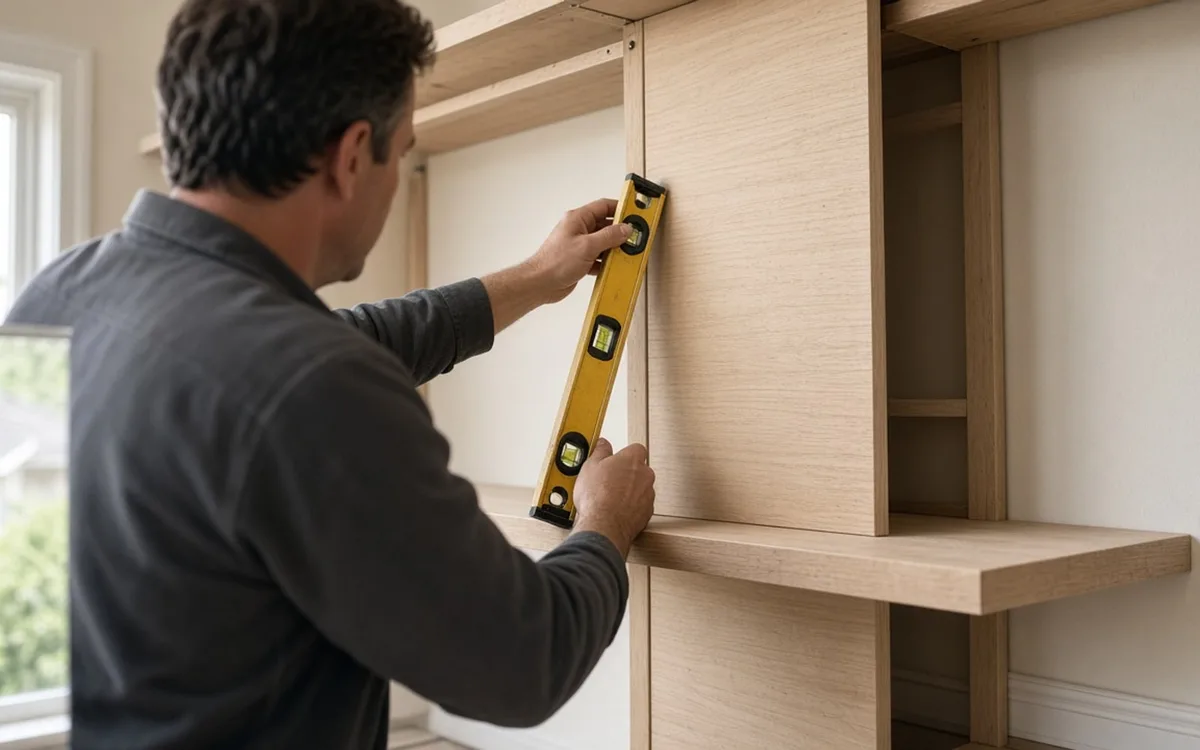
Ask what happens if the wall turns out to be plaster, out of plumb, or hiding a pipe where a drawer tower was going. Good installers scribe panels to uneven walls and adjust on site; the estimate should say whether that is included. The reviews guide covers what to check about the installer; this list is about the document, and the locations page explains where regional wall construction changes the answer.
Homeowner polls
Vote to see live results from other homeowners planning the same project.
StorageCafe found 42% of Americans feel cluttered at home, with clothing the biggest culprit.
No votes yet. Yours will be the first. · saved on this device
No votes yet. Yours will be the first. · saved on this device
No votes yet. Yours will be the first. · saved on this device
 Free toolStorage cost calculator: price the system by the linear foot
Size, material tier and complexity in, a realistic budget range out.
 Free toolWhich storage option fits? Comparisons with sourced numbers
Side-by-side tables for the decisions that change the price most.
 Free toolHow well do you understand storage pricing and design?
9 questions that show what you already know and what to check next.
 Free toolPolls: how other homeowners handle storage
See what other planners chose and add your vote.
Measure each wall you can hang something on, subtract door swings and the return walls you cannot reach, and add the sides of a walk-in only if they are at least 24 inches deep for hanging. A typical reach-in gives 6 to 8 usable feet; a 6-by-8 walk-in gives about 18 to 20 once corners are handled. Corners eat footage because two runs cannot both use the same 24 inches.
Sometimes for design service and warranty, rarely for the panels themselves. HomeGuide lists California Closets at $1,000 to $11,000, Closets by Design at $1,100 to $7,000, and Closet Factory at $1,000 to $4,400 for comparable closets, against an industry average of $70 to $270 per linear foot. Get one brand quote and one independent quote for the same drawing and compare net prices and lead times.
Prefab and wire systems can be unscrewed and reinstalled with new anchors. Custom laminate systems are cut to the wall and usually stay with the house, which is one reason NAR estimates 83% cost recovery on a closet renovation. If you expect to move within a few years, prefer adjustable, modular systems or treat the closet as an improvement to the property rather than furniture.
Decide before the design consultation, not after the install. A professional organizer charges $55 to $100 an hour per HomeAdvisor and typically finishes a closet in two to five hours; junk removal for what gets purged adds $130 to $360. The Talker Research survey found 66% of Americans plan to purge old clothing anyway; doing it first changes the inventory and often shrinks the system you need.
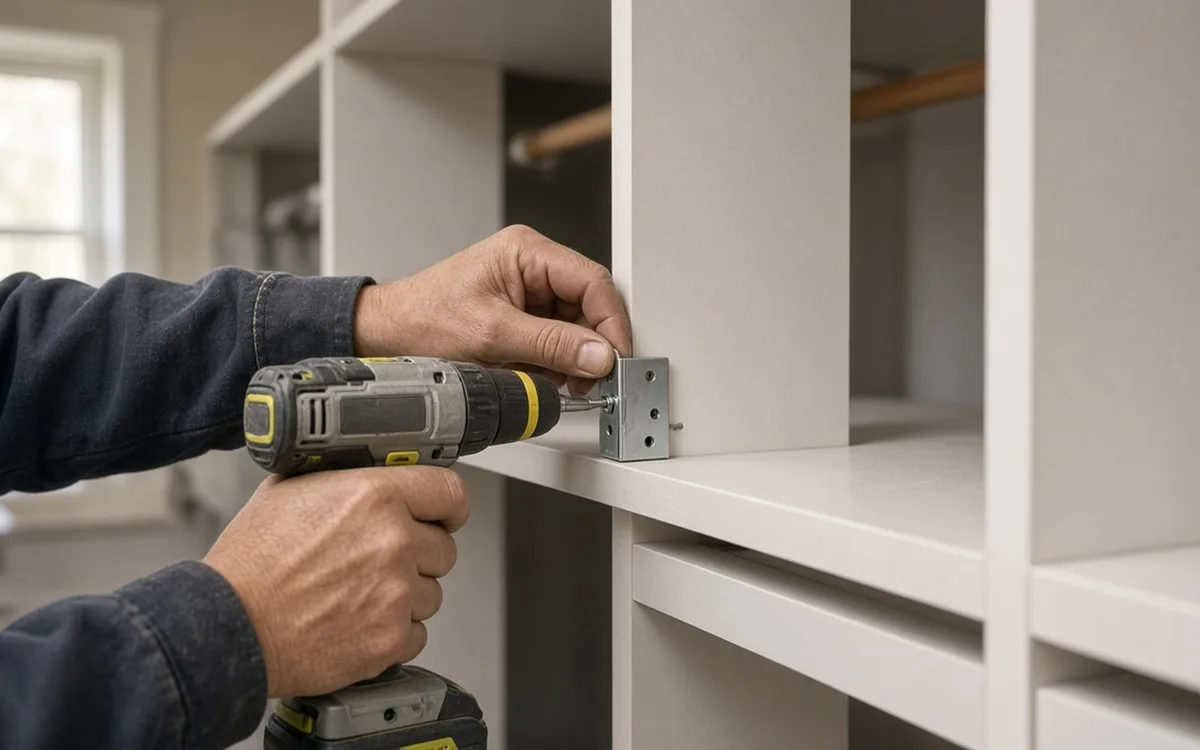
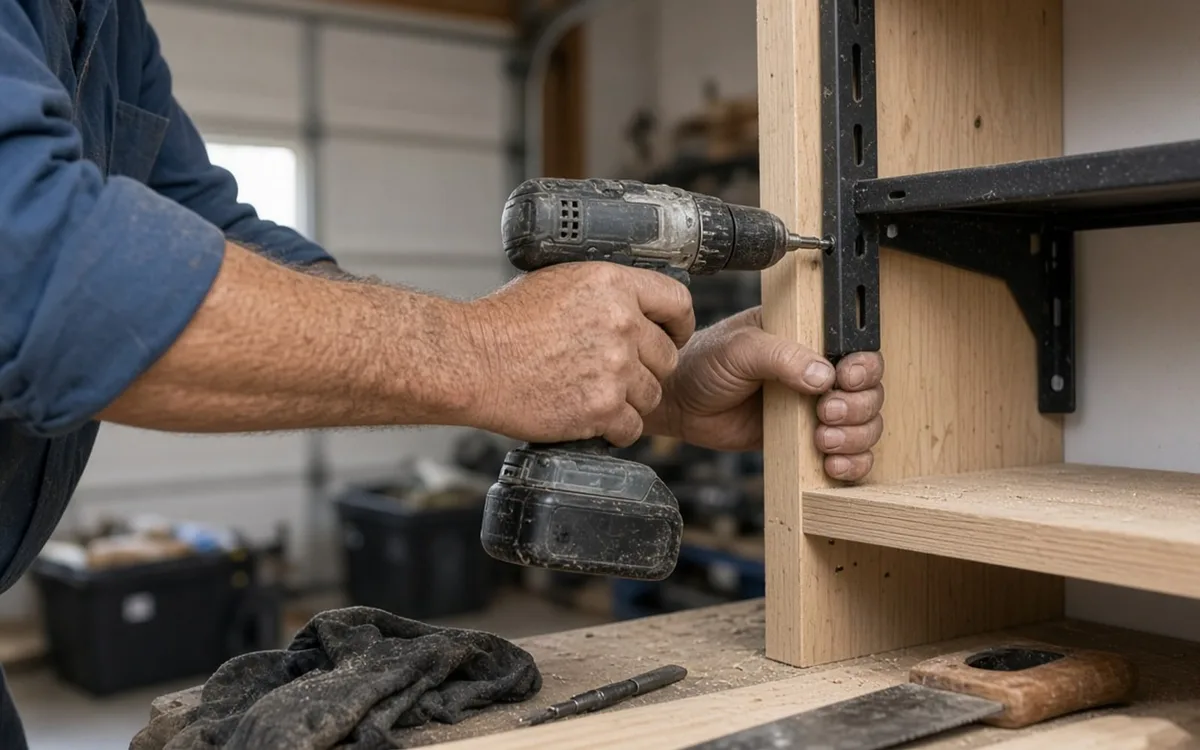
Yes for anything carrying real weight. Hanging rods loaded with coats and drawer towers full of jeans pull on the wall; installers use a cleat or rail screwed into studs at 16 inches, with rated hollow-wall anchors only for light shelves between studs. Ask the estimate to name the anchoring method. Plaster, metal studs, and block walls change the hardware and the price.
Not per foot. A walk-in loses footage to the aisle and the corners; a well-designed 8-foot reach-in with double-hang and a drawer tower often holds as much as a small walk-in. Angi prices a reach-in organizer at $800 to $2,500 and a walk-in at $2,000 to $5,500. Choose the walk-in if you want a dressing room; choose the reach-in if you want storage per dollar.
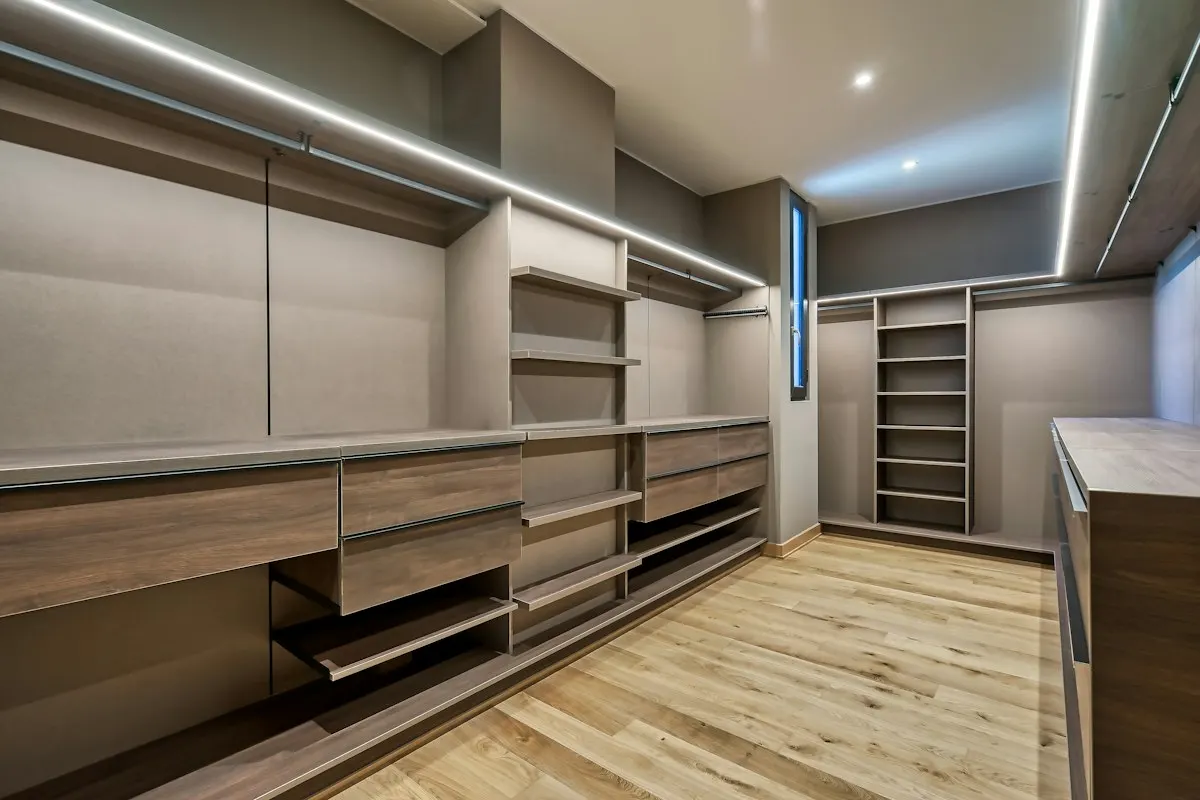
LED strip lighting inside shelves and under rods is a popular add-on and is usually low-voltage, plugged into an existing outlet or hardwired by an electrician. Fixr's $2,000 average for a 12-foot laminate system includes lighting. Budget a few hundred dollars for a plug-in kit and more if a new outlet or switch is needed, which is licensed electrical work in most areas.
A second rod for double-hang, a shelf divider set, and matching slim hangers. HomeGuide notes an inexpensive remodel with rods, shelves, and paint can be as little as $150. Those three changes roughly double hanging capacity in a standard reach-in and cost less than one hour of a designer's time. Do them first, live with the result, and then decide whether a full system is still needed.
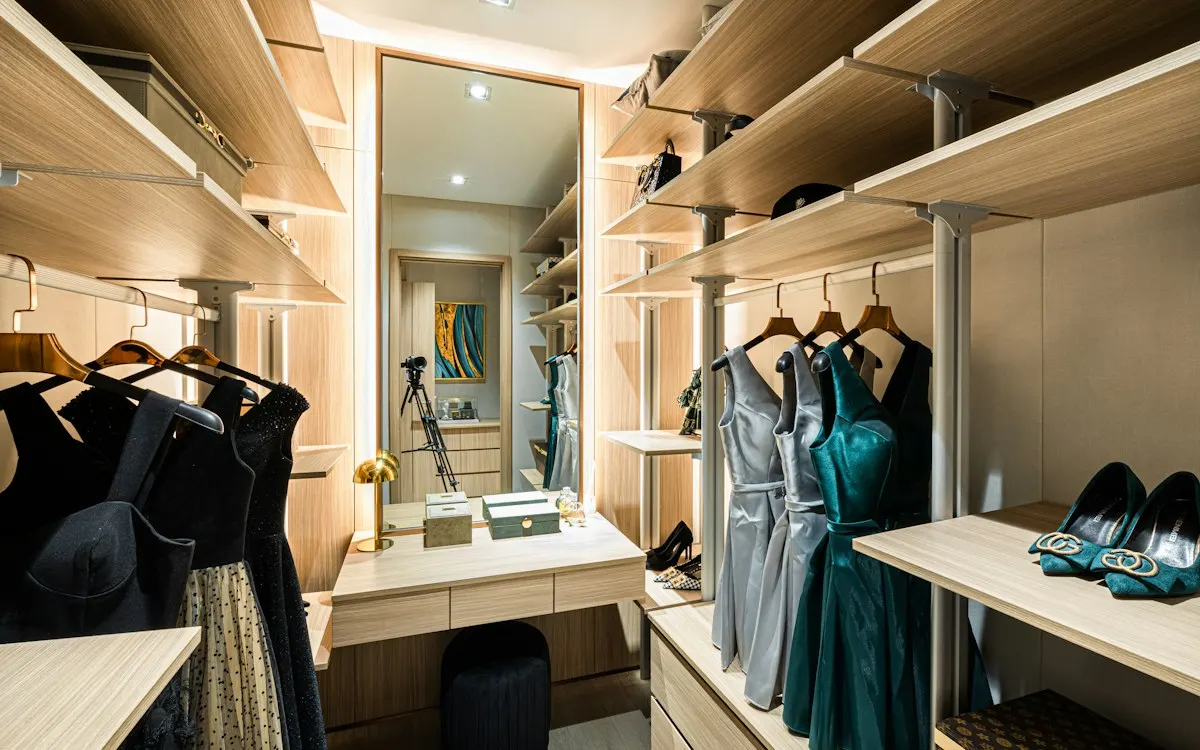





 LocationsRegional planning notes
How climate, codes and prices change a project across U.S. regions.
 ArticlesPlanning articles
Cost guides, checklists and mistakes to avoid before you sign.
 ReviewsHow to read reviews
What genuine contractor reviews look like and what they leave out.
Tell us the size, the condition of what is there now, and what you want to change. Closet Flow Guide passes your request to independent local professionals, who reply with written, no-obligation estimates. The service is free to use.