Which closet are you most likely to fit out next?
No votes yet. Yours will be the first. · saved on this device
Loading...
Closet Flow Guide · Custom closet system vs Prefab closet system
Choose custom for the primary closet, where drawers, doors and a scribed fit are used daily and NAR estimates 83% cost recovery at resale. Choose prefab for secondary, children's and rental closets, where HomeGuide's $400 to $2,200 installed price delivers most of the capacity and the system can move with you. Mixing both in one house is common and sensible.
The custom versus prefab decision is usually framed as quality versus price, but the real difference is fit. A custom system is designed around your wardrobe and cut to your walls. A prefab system is a set of standard modules that you arrange to fit as well as they can. When the closet is square and the wardrobe is simple, prefab gets very close. When the closet is odd or the wardrobe demanding, custom earns its price.
This page works through real scenarios, cost over ten years, climate and house type, resale, common mistakes and how to compare bids. The side-by-side table and verdict on the comparison tool give the short version. Read it alongside your own inventory so each scenario can be checked against what the closet has to hold.
A custom system is cut to your walls and wardrobe with drawers, doors, and scribed panels; a prefab system is a kit installed in hours and adjustable later. Custom wins the primary closet; prefab wins everywhere the contents are light or temporary.
| Factor | Custom closet system | Prefab closet system |
|---|---|---|
| Installed cost | $1,000–$8,000 (HomeGuide); $2,128 avg (Angi) | $400–$2,200 (HomeGuide); $200–$1,900 (Fixr) |
| Install time | 4–16 hours; several days for walk-ins | 2–4 hours (Fixr) |
| Fit to the wall | Scribed to uneven walls and ceilings | Standard modules, gaps at edges |
| Drawers and doors | Full range | Limited; often none |
| Adjustability later | Shelves adjust; layout fixed | Whole layout can move |
| Moving house | Stays with the house | Unscrews and comes along |
| Lead time | 2–6 weeks manufacturing | In stock |
| Best for | Primary closet, dressing room, resale | Kids, guest, rental, garage wall |
Custom wins the primary closet, where drawers, doors, and a fitted look are used every day and where NAR's 83% cost-recovery estimate applies. HomeGuide's $1,000 to $8,000 range buys a system built around the inventory, and the scribed panels handle the sloped ceiling or plaster wall a kit cannot.
Prefab wins the second bedroom, the guest room, the rental, and any closet whose contents change every year. Fixr's two-to-four-hour install and HomeGuide's $400 to $2,200 installed price get most of the function for a third of the money, and the system moves with you. The closet page explains how to get the drawer tower you want in a custom primary closet while keeping the rest prefab.
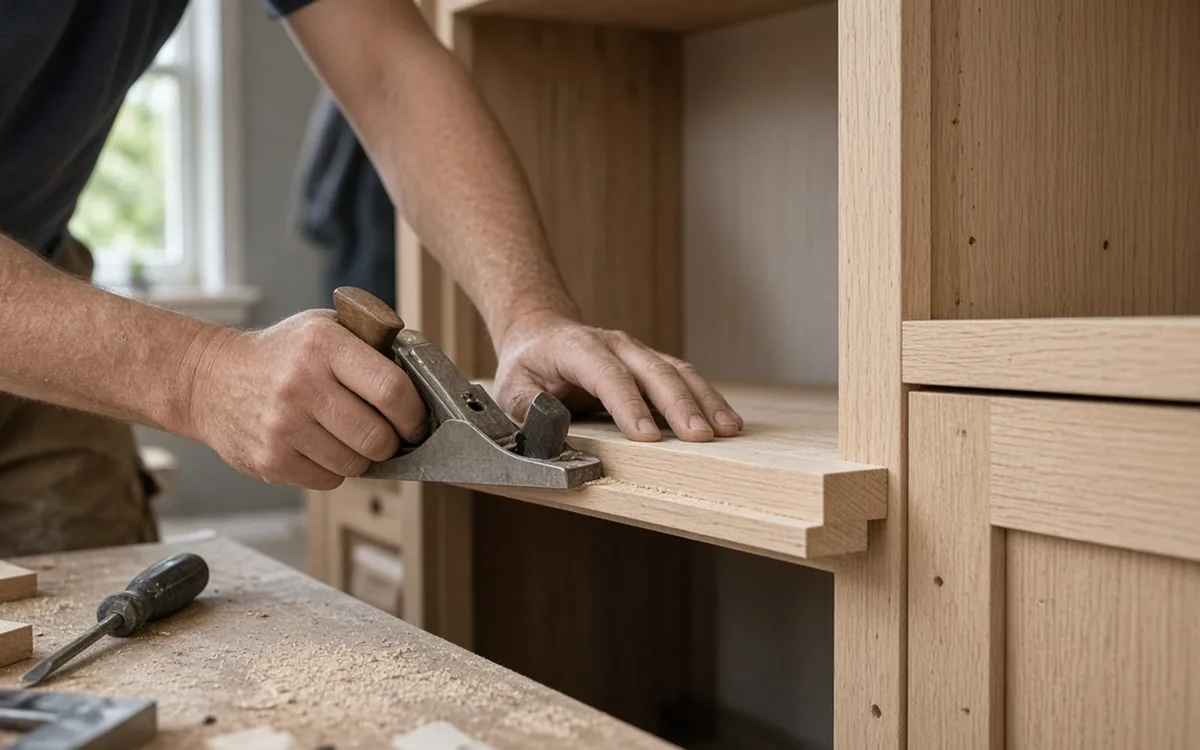
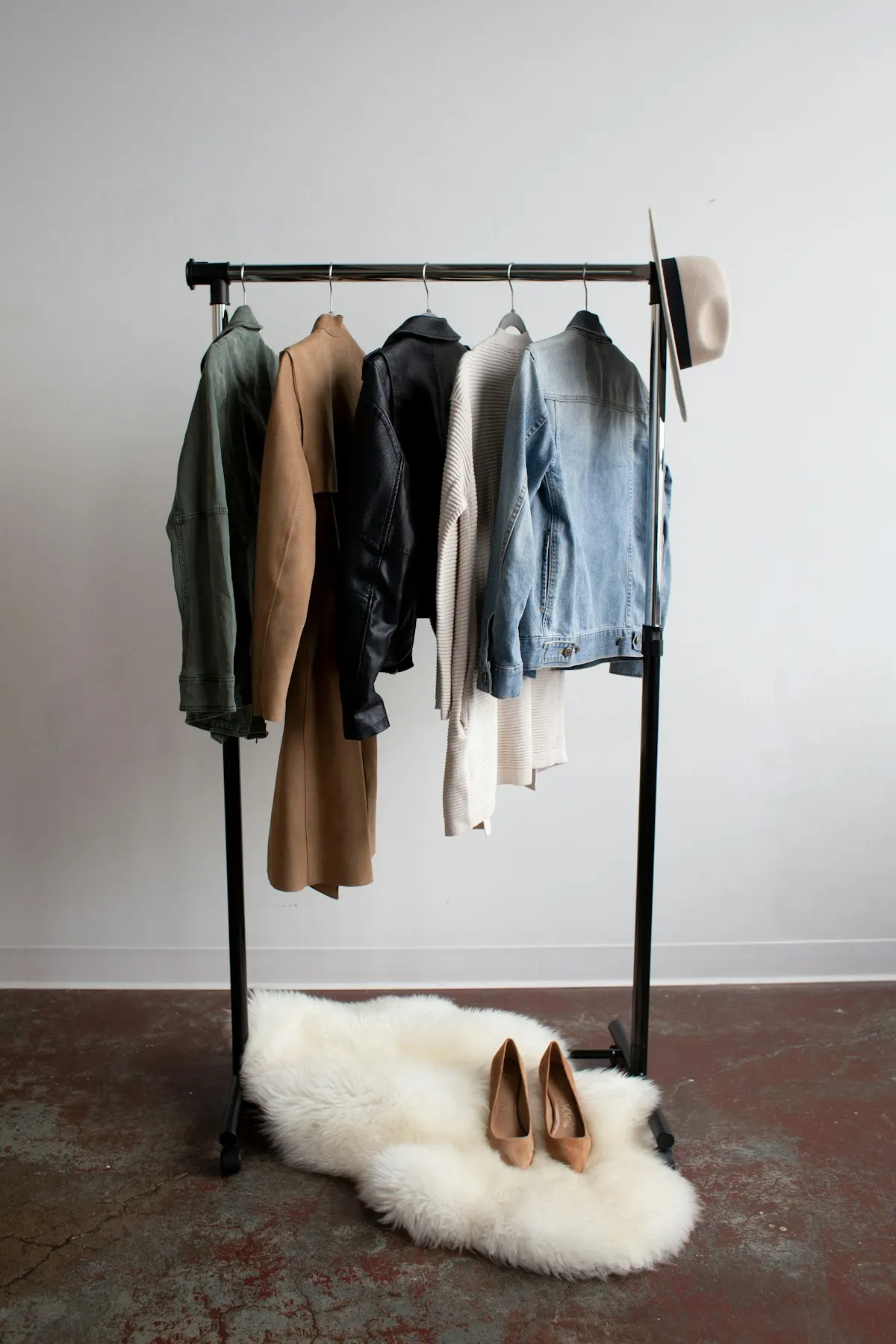
Prefab wins where contents are light, change often or belong to someone who will move out. A child's closet that needs a low rod now and a high one in five years, a guest closet that holds coats and luggage, a linen closet, a rental unit and a closet in a starter home all fit. HomeGuide prices prefab systems at $400–$2,200 custom, and Fixr reports prefab installs take 2–4 hours.
Prefab also suits square closets with plain drywall and standard ceiling heights, since modules are designed around those dimensions. The more the closet departs from standard, the more gaps and compromises appear. Track-mounted systems hung from a single rail are the most forgiving, because shelves and rods can shift without re-drilling. Choose one finish throughout to keep the result tidy. Check the kit's minimum and maximum widths against your wall before buying, since a few inches either way decides whether it fits cleanly.
Custom justifies itself in three situations. The first is the primary closet, used every day by people who want drawers, doors, a place for every category and a finished look. The second is an awkward space: a sloped ceiling under a roof, an uneven plaster wall, a narrow return or a closet deeper than standard. The third is a walk-in that functions as a dressing room, with an island, lighting and mirrors.
In these cases prefab either leaves gaps or cannot do the job. Angi's 2026 guide puts the national average custom closet at $2,128, and HomeGuide's average build is $3,000. The difference between those and a prefab install is usually the drawers, the scribing and the design time, all of which matter in a primary closet and matter much less in a guest closet.
Upfront, a prefab reach-in often costs a third to a half of a custom equivalent. Over ten years, both systems usually need little beyond occasional adjustment. Custom laminate rarely needs replacing in that time if it stays dry. Prefab may need a shelf replaced or a rail re-anchored, which costs little. The ten-year cost gap therefore stays close to the upfront gap, and the question becomes whether the extra function is worth that difference.
Moving changes the math. A prefab system can come down and go to the next house, while a custom system stays behind as part of the sale. For a primary closet, NAR's 2025 estimate that 83% of a closet renovation's cost is recovered at sale narrows the effective gap considerably. For secondary closets, resale recovery is harder to count on, which favors prefab there. Weigh how long you expect to stay before choosing.
| Factor | Custom | Prefab |
|---|---|---|
| Upfront cost | Higher; design and scribing included | Lower; modules and install time |
| Ten-year upkeep | Minimal; slide or shelf repairs | Minimal; re-anchor or swap parts |
| On moving | Stays with the house | Can move with you |
| Resale effect | Strongest in the primary closet | Neutral in most closets |
Older houses favor custom. Plaster walls are rarely flat, ceilings slope, closets are shallow and odd widths are common. Prefab modules leave visible gaps in those rooms, and anchoring into plaster and lath takes skill. Newer houses with square drywall closets suit prefab well. Neither choice changes much with climate, but material does: in humid regions, ask for edge-banded laminate or choose coated wire so panels do not swell.
Closets on exterior walls in cold climates can collect condensation behind stored clothes. Both custom and prefab systems should leave a small air gap behind hanging sections on those walls. In seismic regions, tall towers of either type should be anchored to studs at the top, since a loaded drawer unit is heavy. The custom closet systems page covers anchoring in more detail.
The first is buying custom for every closet in the house. Secondary closets rarely need drawers or scribing, and the cost adds up quickly. The second is buying prefab for the primary closet and then adding a dresser to the bedroom because the system has no drawers, which spends the savings on furniture. The third is choosing on the showroom rendering rather than on the inventory.
Another costly mistake is comparing a discounted custom list price against a prefab total. HomeGuide reports Closets by Design promotions of 40–60% off list, so compare net prices only. Finally, some buyers skip installation on prefab to save money and then anchor into drywall alone. A loaded rod pulls anchors out, so either hire the install or find the studs.
Put both on the same basis. Start with the inventory and ask each to show how it holds the same rod inches, folded stacks and shoes. Then list what each includes: panels, drawers, doors, accessories, installation, removal of old shelving and patching. Divide the base price by linear feet for each. Differences in capacity show up quickly when both are measured against the inventory.
Then look at what cannot be matched: scribing, drawer quality, finish options and warranty. Decide whether those are worth the difference for this particular closet. Many households end up with a custom primary closet and prefab everywhere else. The storage cost calculator gives a planning range for each approach, and the 2026 cost guide explains how to read the line items.
A custom system is built into the house. It is fastened to cleats, scribed to the walls and often trimmed to the ceiling, so removing it usually damages panels and leaves holes to patch. It is best thought of as part of the home, like kitchen cabinets. If you expect to remodel the bedroom suite within a few years, delaying the custom closet until the remodel avoids paying twice for the same wall.
A prefab system is closer to furniture. Track-mounted and freestanding kits come down with a screwdriver, pack flat and go up again in a new closet of similar size, though some parts rarely fit perfectly the second time. For renters, frequent movers and anyone expecting a remodel, that portability is worth real money. The custom closet cost guide explains how to price a phased approach that starts with prefab and ends with custom.
Homeowner polls
No votes yet. Yours will be the first. · saved on this device
Angi's 2026 custom closet average is $2,128.
No votes yet. Yours will be the first. · saved on this device
Partly. Choosing one finish throughout, adding trim at the edges, and having an installer level and anchor it properly closes most of the gap. What prefab cannot do is scribe to an uneven wall or fit a drawer tower into an odd width. If those matter, price a custom reach-in; the difference is often smaller than expected.
For the primary closet, usually, because NAR estimates 83% cost recovery and buyers value it. For other closets, choose prefab and take it with you. If the house is a short-term hold, a modular custom system that unscrews from a rail is a middle path some installers offer.
Per foot, nearly, if you use double-hang and adjustable shelves well. What they lack is drawers, so a dresser stays in the room. Count the folded items in your inventory; if they need more than four shelves, a custom drawer tower may be what you are actually paying for.
They are three different products. PAX is a flat-pack wardrobe of standard frames you assemble and wall-mount yourself. Elfa is a configurable track system hung from a top rail, installed DIY or by the retailer. California Closets is a design-and-install service, which HomeGuide prices at $1,000 to $11,000. Get the same inventory drawn in all three and compare complete layouts, not promotional percentages.
Not directly, since the components are different, but a prefab system can stay in place while you save for custom and then move to a secondary closet. Some households use prefab in the primary closet for a year to learn how they actually use the space before designing a custom system.
Often longer, and brand installers typically cover both materials and installation. Prefab warranties usually cover components only. Read the terms: what is covered, for how long, and whether the installer or the manufacturer handles claims. A long warranty from a company without a local presence is worth less than it sounds.
Yes. Semi-custom systems use standard components in more sizes, cut to length on site, sometimes with a few drawers. Independent installers often offer this. It suits square closets where some drawers are wanted but full custom feels excessive. Ask for a drawing either way so you can compare it with full custom.
Poorly. Modules are designed for flat ceilings, so a slope leaves wasted space or requires shorter sections. A custom system can be cut to follow the slope and use the full height where it exists. Under a sloped roof, custom usually gives noticeably more capacity for the money.
Count folded items that do not suit shelves: underwear, socks, workout clothes and accessories. Most people need a few drawers for these and shelves for sweaters and jeans. Drawers are the most expensive part of a custom closet, so size them to the inventory.
Not if it is neat, well anchored and in a neutral finish. Buyers notice organized capacity more than brand. A tidy prefab system in a secondary closet reads as a plus. In a primary suite, buyers in higher price ranges may expect custom, which is where the resale case for custom is strongest.
 ComparisonWire (ventilated) shelving vs Laminate (melamine) panels
Choose coated wire where contents are light, humidity is high or budgets are tight, such as linen, children's and laundry closets; Angi prices it at $800 to $2,000 installed.
 ComparisonOverhead racks vs Wall track, slatwall, and shelving
Put items used weekly on the wall, and seasonal bins on overhead racks.
 ComparisonWalk-in pantry vs Pantry cabinets in the kitchen
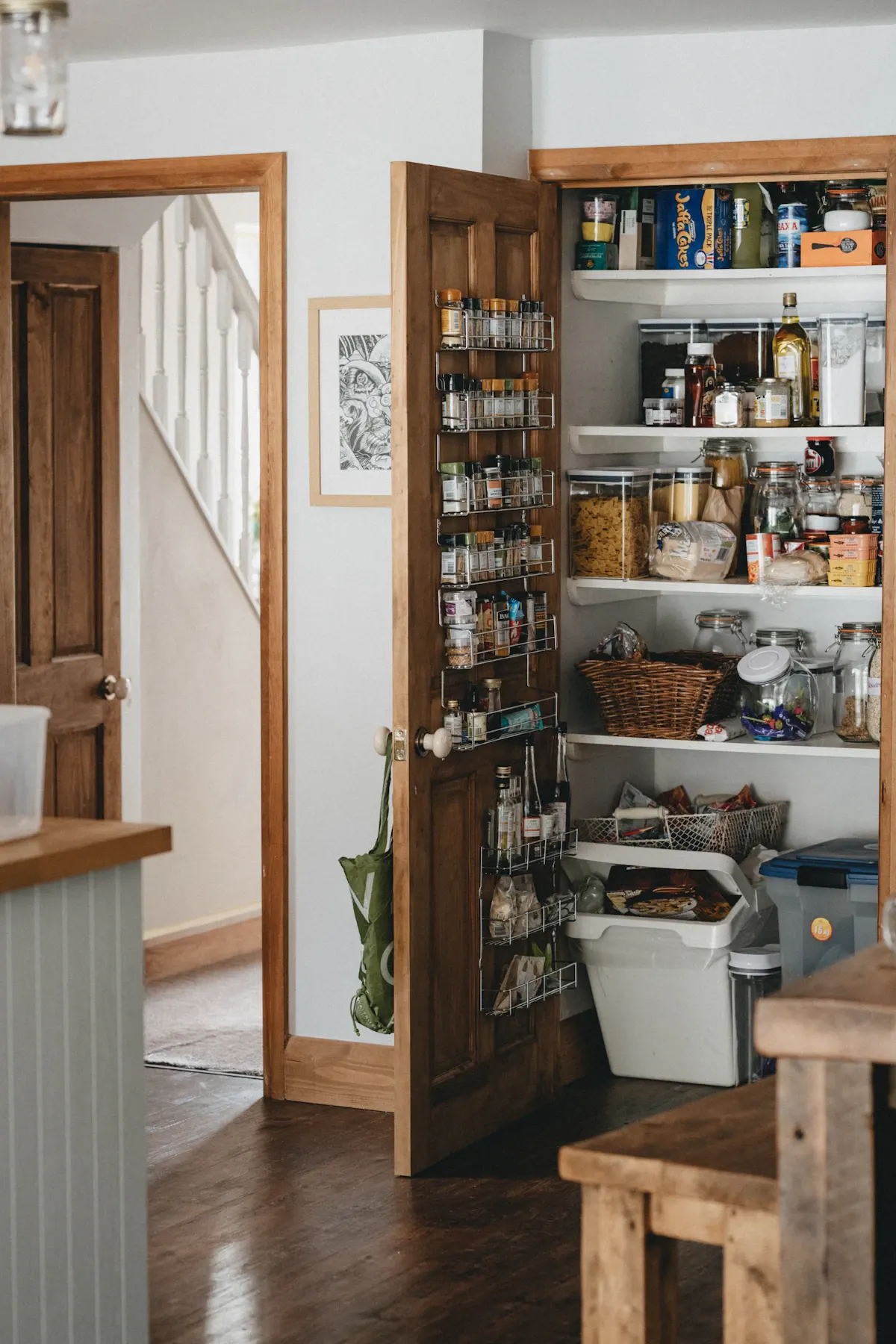
Choose a walk-in pantry if you have or can create 20 square feet or more near the kitchen, cook often and store small appliances; shallow shelves on three walls hold more per dollar.
 ComparisonMudroom addition vs Conversion or built-in in existing space
Most households get what they need from a built-in in the existing entry or a conversion of a garage corner, laundry or porch, at a fraction of an addition's cost.
 Service guideCustom Closet Systems
A custom closet system is shelving, rods, drawers, and doors cut and installed to the dimensions of your closet and the contents of your wardrobe.
 Service guidePantry Organization
Pantry organization is the planning and fitting of a food closet, walk-in pantry, or pantry cabinet so everyday items are visible and reachable and bulk items and appliances have a place.
 Service guideGarage Storage Solutions
Garage storage covers wall systems, cabinets, shelving, and overhead racks that hold tools, bikes, bins, and seasonal gear while leaving room to park and move.
 Service guideMudroom Built-Ins
Mudroom built-ins are the bench, cubbies, hooks, drawers, and cabinets that give each household member a place for coats, bags, and shoes at the door.
 Free toolStorage cost calculator: price the system by the linear foot
Size, material tier and complexity in, a realistic budget range out.
 Free toolHow well do you understand storage pricing and design?
9 questions that show what you already know and what to check next.
 Free toolPolls: how other homeowners handle storage
See what other planners chose and add your vote.
Tell us the size, the condition of what is there now, and what you want to change. Closet Flow Guide passes your request to independent local professionals, who reply with written, no-obligation estimates. The service is free to use.