Which material would you choose for your main closet?
Angi prices wire organizers at $800–$2,000 and laminate at $1,200–$3,500 installed.
No votes yet. Yours will be the first. · saved on this device
Loading...
Closet Flow Guide · Materials
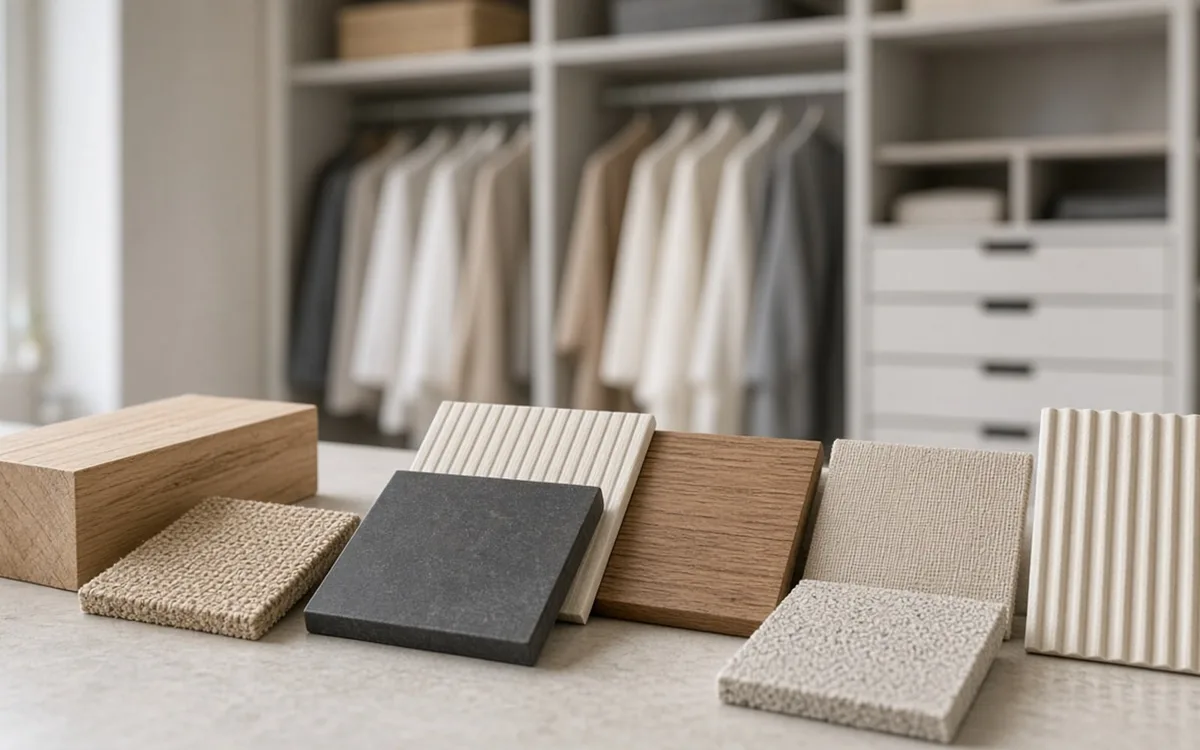
Wire shelving is the cheapest and most moisture tolerant but sags and marks soft clothes. Laminate over particleboard is the standard for custom closets and pantries. Plywood and solid wood cost more and suit painted built-ins and mudrooms. Garages favor steel or thermofoil cabinets, rated track systems and welded overhead racks. Match the material to the load, the humidity and how often things move.
By Closet Flow Guide editorial · Updated 2026-09-25
Material choices in storage are less about appearance than about three physical questions: how much weight the shelf will carry, how much moisture the room sees, and how often the contents change. A material that is perfect in a dry bedroom closet can swell in a laundry-side pantry, and a garage cabinet that looks fine in a showroom can rust or delaminate after one humid summer. This guide goes room by room and material by material.
Prices below come from Angi, HomeGuide and Fixr, and they describe installed systems unless noted. The dedicated comparison of wire and laminate goes deeper on the most common closet decision; this guide sets that decision in the context of every other option. Where no publisher gives a figure, the guide describes the effect in plain terms rather than inventing a range.
Five materials cover nearly all residential storage. Epoxy-coated or vinyl-coated wire is used for ventilated shelving. Laminate, also called melamine, is particleboard faced with a resin paper and is the standard for custom closets. MDF is used for painted doors and drawer fronts, and Angi prices a full MDF organizer at $1,000–$2,500 installed. Plywood and solid wood appear in built-ins, mudrooms and high-end closets. Steel, aluminum and rigid plastics dominate garages, where impact, dampness and temperature swings rule out the softer boards.
Each has a natural home. Wire suits linen closets, children's closets and laundry rooms. Laminate suits primary closets and pantries. Painted MDF and plywood suit mudroom lockers and benches that take daily knocks and need touch-up. Steel and heavy-duty track suit garages. The mistakes come from putting a material in the wrong room, usually to save money or to match a finish elsewhere in the house.
| Material | Best room | Main weakness |
|---|---|---|
| Coated wire | Linen, kids, laundry, garage shelving | Sags under heavy stacks, marks knits |
| Laminate (melamine) | Primary closet, pantry | Swells at unsealed edges if wet |
| Painted MDF | Doors and drawer fronts | Chips at edges, dislikes water |
| Plywood or solid wood | Mudroom, built-ins, luxury closets | Cost and movement with humidity |
| Steel or aluminum | Garage cabinets and racks | Rust if scratched in damp garages |
Yes, more often than showrooms suggest. Angi prices installed wire organizers at $800–$2,000, and prefab kits of any material run $500–$2,000 installed. Wire lets air circulate, which helps in humid closets and laundry rooms, and it does not swell. Modern track-mounted wire systems hang from a single rail screwed into studs and adjust without tools, which suits children's closets that change every year.
The limits are real, though. Wire shelves bow under heavy stacks of jeans or books, leave lines on soft knits and let small items fall through. Drawers are baskets rather than solid boxes. Shelf liners fix the marking and falling issues cheaply. For the primary closet, many households do best with a laminate drawer tower and hanging section on the main wall and wire shelves on the returns or above the rod.
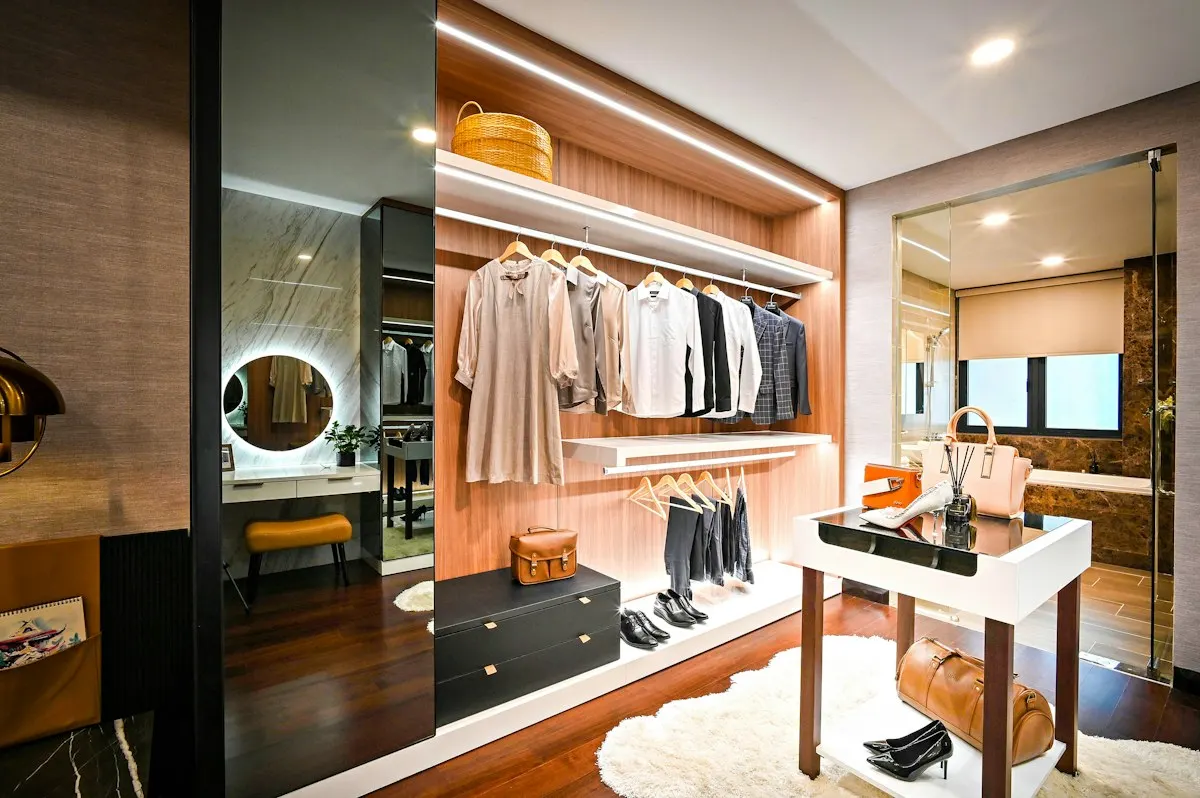
Most laminate panels look alike in a showroom. The differences are in the substrate density, the thickness of the panel, the edge banding and the hardware. Thicker panels span wider without sagging, and dense particleboard holds screws and shelf pins better. Edge banding on every exposed edge keeps humidity out. Angi's installed range for laminate systems is $1,200–$3,500, and the spread reflects these hidden differences as much as finish.
Ask each installer for the panel thickness, the maximum unsupported shelf span, whether every cut edge is banded, and the slide rating on drawers. Full-extension slides rated for heavy loads are worth specifying for jeans and sweaters. Finish colors cost more than white; HomeGuide notes wood-grain textures can add up to 40%. That premium buys appearance only, so spend it where it is seen daily.
Plywood holds screws better than particleboard, tolerates occasional moisture and can be repaired. Solid wood looks and ages well but moves with humidity, so wide panels need careful construction. Both suit mudroom benches that take wet boots and backpacks, built-ins that will be painted to match trim, and luxury closets where the cabinetry is furniture. They cost noticeably more than laminate and take longer to build because they are finished on site or in a shop.
For most closets and pantries, the premium buys little extra function. Where it does pay is in the mudroom, where scuffs can be sanded and repainted, and in any built-in that must look like the house's original millwork. The mudroom built-ins page explains which parts of an entry built-in deserve solid material and which can be laminate inside a painted face frame.
Garages punish materials that closets never test. Temperatures swing, humidity rises in summer, cars bring in water and salt, and contents are heavy and sharp. Steel cabinets with a powder coat, aluminum, and thermofoil or sealed boards resist those conditions. Plain particleboard swells when it touches a wet floor, so garage cabinets should sit on legs or hang from rails. Angi puts installed garage cabinets at $505–$2,164 each.
Wall systems vary as well. Slatwall panels spread load across many screws and look finished; metal track rails are simpler and carry concentrated loads if lagged into studs. Overhead racks should be welded or heavy-gauge steel with a published rating. Fixr's split between prefab and custom whole-garage packages, $2,300–$6,300, reflects mostly these material choices. The overhead versus wall comparison covers load in more depth.
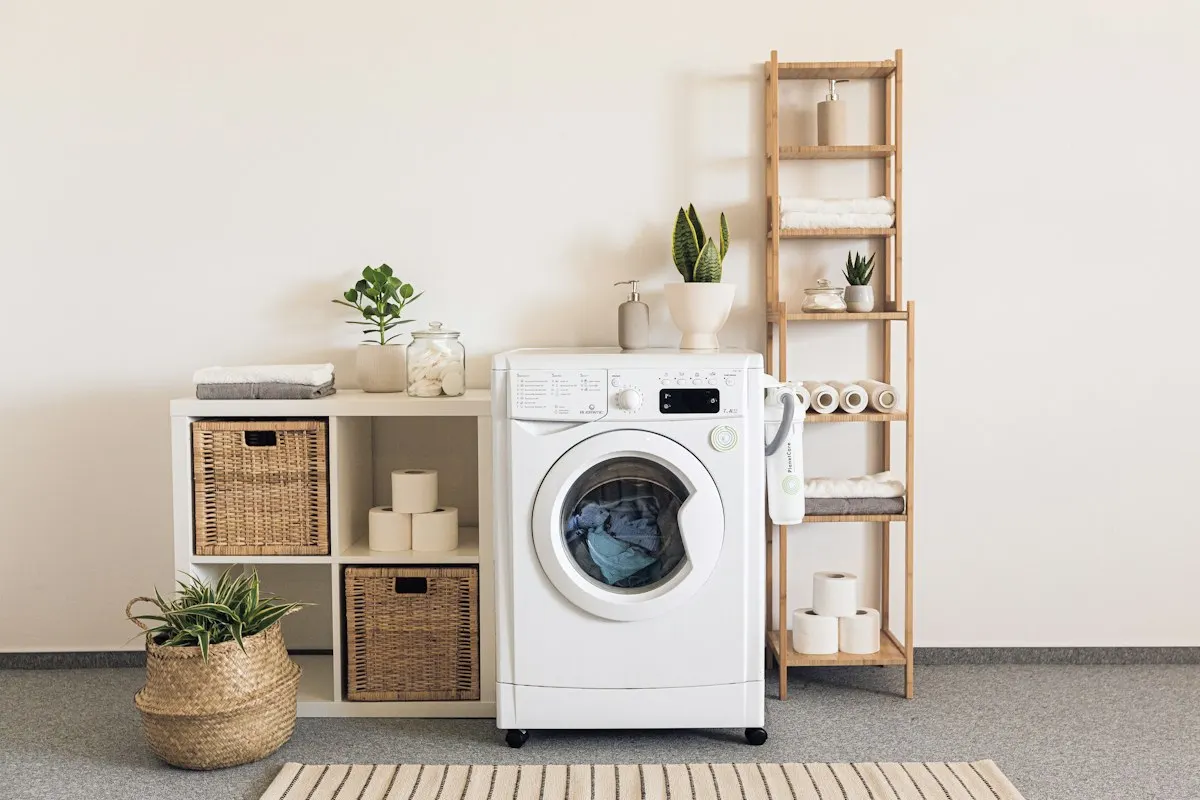
Pantries need surfaces that wipe clean and shelves that do not sag under cans. Laminate with banded edges is the usual answer. Wire works for dry goods in a ventilated space but lets crumbs fall through and tips small jars. Solid wood shelves look good in a walk-in but need a sealed finish to resist oil and spills. Glass or acrylic bins help visibility but add cost without adding capacity, so buy them after the shelves are in and the inventory is settled.
Houzz's 2026 Kitchen Trends Study found 47% of kitchen renovators added pantry cabinets, which means most pantry material decisions are really cabinet decisions. Specify full-extension pull-outs in deep cabinets and adjustable shelves throughout. Among butler-pantry renovators, 67% use the room for small appliances, 59% chose enclosed cabinetry and 52% open shelving; there, heat-tolerant surfaces and an outlet near the appliance shelf matter more than the shelf material itself.
The accessories that earn their cost are the ones used daily. Full-extension drawer slides, a pull-down rod for high hanging, a valet rod for staging outfits and adjustable shoe shelves all get used. Soft-close hinges on doors reduce wear. In pantries, pull-outs in deep cabinets pay for themselves. In garages, a locking cabinet for chemicals and a well-anchored bike hook are worth more than decorative accessories.
Skip accessories that solve problems you do not have. Jewelry inserts, tie racks, belt racks and built-in hampers are useful to some households and clutter to others. Check the inventory. If it lists no ties, skip the tie rack. The custom closet systems page shows which accessories map to which inventory categories.
Well-installed laminate lasts decades in a dry closet; the usual failure is a sagging shelf span or a drawer slide, both replaceable. Coated wire lasts a long time but can chip, and rust appears where the coating is damaged. Painted MDF and wood need touch-up in mudrooms. Garage steel lasts if scratches are sealed. None of the cited publishers gives a formal lifespan figure, so treat manufacturer warranties as the best available proxy.
Maintenance is simple. Keep closets and pantries dry, wipe spills promptly, tighten slide screws once a year and do not exceed shelf ratings. In garages, check anchor bolts on overhead racks every season and keep the lowest cabinets off the floor. A system that is loaded within its limits and kept dry rarely needs replacing before the house does.
Homeowner polls
Angi prices wire organizers at $800–$2,000 and laminate at $1,200–$3,500 installed.
No votes yet. Yours will be the first. · saved on this device
No votes yet. Yours will be the first. · saved on this device
In closet systems the terms are used interchangeably. Strictly, melamine is the resin-impregnated paper fused to a particleboard core, while laminate can also mean high-pressure laminate, a thicker, tougher surface used on countertops. Closet panels are almost always thermally fused melamine. Ask which one is quoted if a bid lists both.
With care. Ask for edge banding on every exposed edge, keep the bottom panels off a wet floor, and ventilate the room. A linen closet near a shower is usually fine; a closet that gets splashed is not. Coated wire is the safer choice where water contact is likely.
The shelf span is too long for the panel thickness and the load. Heavy folded jeans or books on a wide shelf will bow a thin panel. The fix is a center support, a thicker panel or a narrower span. Ask each installer for their maximum unsupported span before signing.
Yes, for closets, if painted properly and kept dry. MDF takes paint well and does not show grain, which is why it is used for shaker-style fronts. It chips at edges under impact and swells if soaked. In a mudroom that sees wet gear daily, plywood or solid wood fronts hold up better.
Neither is better in general. Slatwall covers the wall, spreads loads and looks finished, but costs more per foot. Track systems cost less, go up faster and handle concentrated loads well if lagged into studs. Choose slatwall for a finished garage and track for a working garage.
Rigid resin cabinets resist moisture and rust and suit light to moderate loads. They flex under heavy tools and can warp in extreme heat. For a workshop, steel lasts longer. For bins, sports gear and paint cans in a damp climate, resin is a reasonable, low-maintenance choice.
Smooth white or light laminate wipes clean easily and shows spills so they get cleaned. Textured wood-grain hides marks but holds crumbs. Painted wood needs a durable enamel. Unfinished wood absorbs oil and should be avoided on pantry shelves. Laminate with banded edges is the practical default for most pantries.
Not necessarily. Some companies sell both, which can simplify scheduling and warranties, but garage systems need different materials. Choose each system for its room. If one company covers both, check that the garage line uses garage-grade materials rather than closet panels.
 Service guideCustom Closet Systems
A custom closet system is shelving, rods, drawers, and doors cut and installed to the dimensions of your closet and the contents of your wardrobe.
 Service guideGarage Storage Solutions
Garage storage covers wall systems, cabinets, shelving, and overhead racks that hold tools, bikes, bins, and seasonal gear while leaving room to park and move.
 Service guideMudroom Built-Ins
Mudroom built-ins are the bench, cubbies, hooks, drawers, and cabinets that give each household member a place for coats, bags, and shoes at the door.
 Service guidePantry Organization
Pantry organization is the planning and fitting of a food closet, walk-in pantry, or pantry cabinet so everyday items are visible and reachable and bulk items and appliances have a place.
 PlanningHow to plan a storage project from the inventory to the installer brief
Plan a storage project in five steps: sort and purge first, inventory what remains by category and dimension, measure the walls, ceiling and framing, choose a scope that fits the contents and budget, and write a one-page brief with a sketch.
 CostsWhat storage projects cost in 2026, from a reach-in closet to a mudroom addition
In 2026, Angi puts the average installed closet organizer at $1,542 and a custom closet at $2,128, with reach-ins from $800 and walk-ins to $5,500.
 PermitsPermits for storage work: when shelving becomes a permitted project
Most closet, pantry and garage shelving needs no building permit because model codes treat cabinets and similar finish work as exempt.
 Free toolStorage cost calculator: price the system by the linear foot
Size, material tier and complexity in, a realistic budget range out.
 Free toolWhich storage option fits? Comparisons with sourced numbers
Side-by-side tables for the decisions that change the price most.
 Free toolHow well do you understand storage pricing and design?
9 questions that show what you already know and what to check next.
 Free toolPolls: how other homeowners handle storage
See what other planners chose and add your vote.
Tell us the size, the condition of what is there now, and what you want to change. Closet Flow Guide passes your request to independent local professionals, who reply with written, no-obligation estimates. The service is free to use.